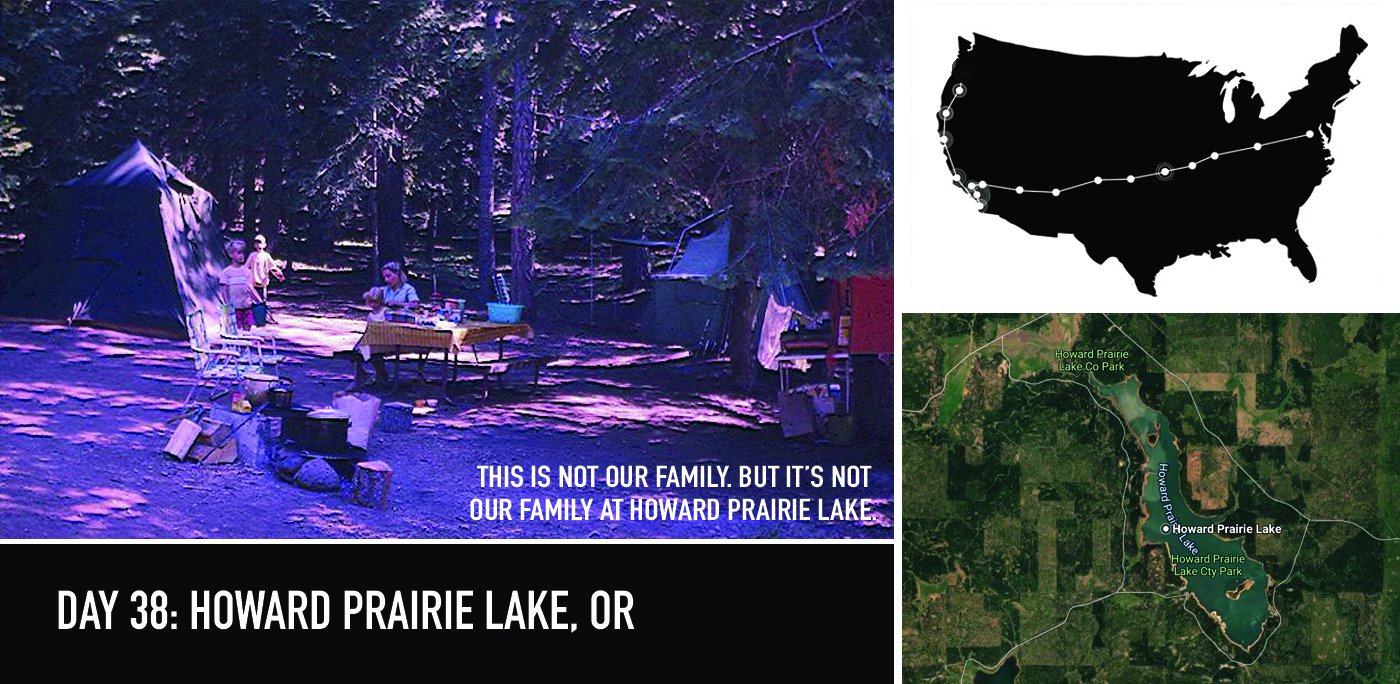
Tim rented a boat and fished all day. He took Doug out too and we all took a ride and a hike and collected pine cones. Cooked spaghetti and brownies. Battened down and had a rain storm.
Marge Binder, July 23, 1969
Inside I must have been miserable. But that couldn’t stop the cuteness!
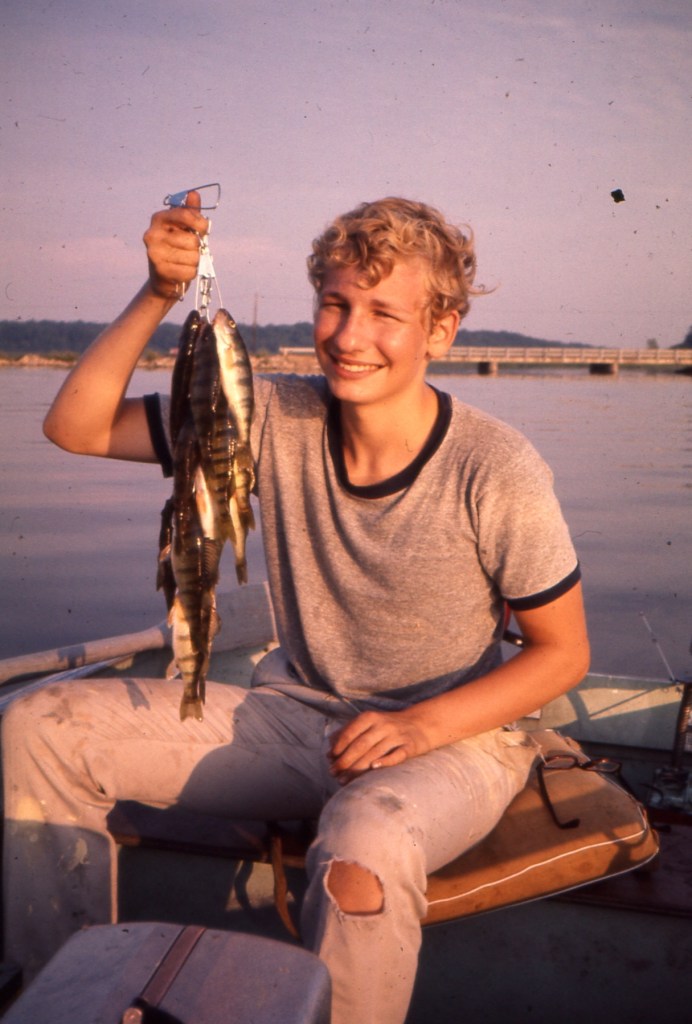
Mom’s diary clocks 30+ times that Tim fished on this 62-day trip. I wouldn’t be surprised if she omitted 10 or 20 other times. Tim loved to fish. All his life, that was his catharsis, his place to be alone, to captain his own ship and leave the rest of the world back on shore.
As an adult, when he visited our Lake Michigan home each summer with his own family, he’d set out on the big lake from Pentwater pretty much every single morning and return well after dark (which could be after 11 o’clock). Dad bought a real fishing boat — the Pequod — back in the 90s to encourage even more fishing. Tim rewarded him with dozens of huge Coho salmon and some other kinds too.
Dad would sometimes accompany Tim for one of their marathon conversations. (More often, Dad would beg to be released after a few hours.)
Tim and fish, but probably not from this trip.
In the minutes after learning that Tim had died unexpectedly, I pictured him and Dad being reunited aboard the Pequod in the sky. This is the image that resulted, in time for what would have been his 61st birthday.
ADDENDUM: After I published this I realized this installment takes place in Oregon. Another eerie coincidence with this blog: When I got news of Tim’s death in 2015, I was on a business trip in Portland. As I wandered the downtown streets in a daze, this scene first began forming in my mind’s eye.
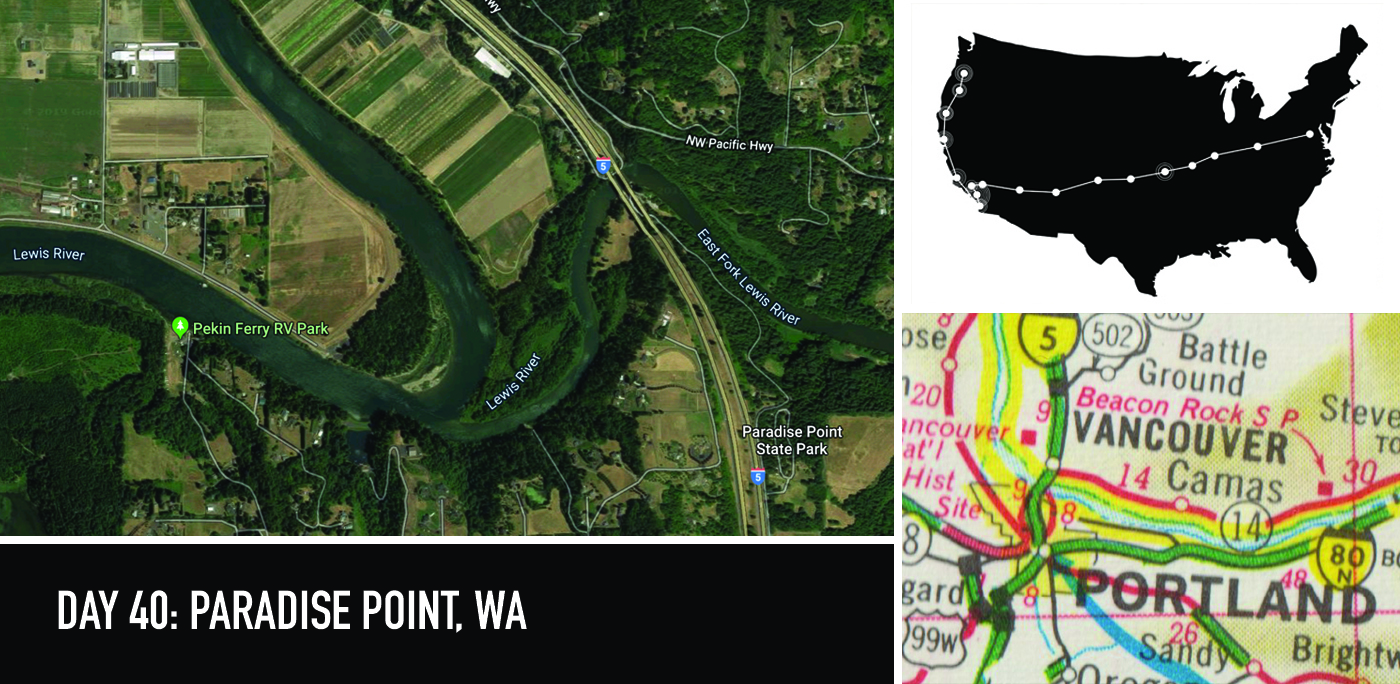
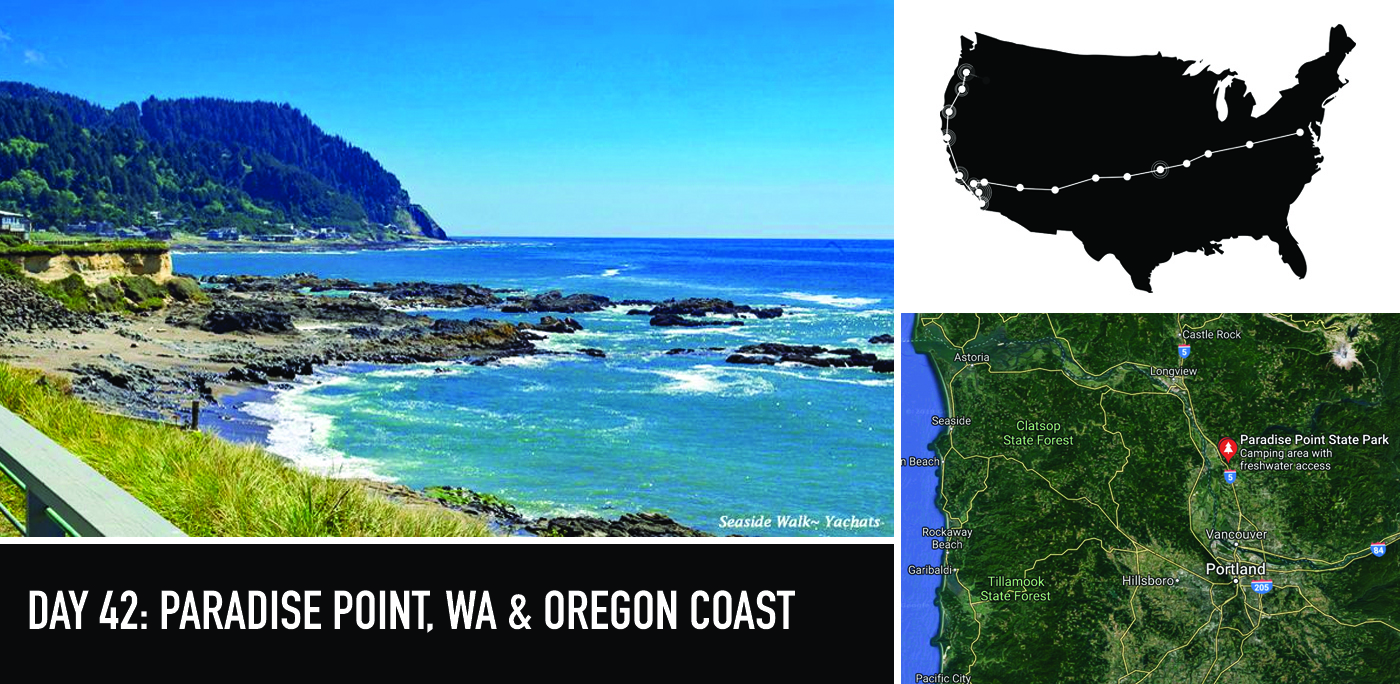
Got an early start—8 AM. Stopped at Medford for breakfast then Jim drove 300 miles to Portland. Camp there full so set up at Paradise Point, Washington. Cold & windy.
Marge Binder, July 24, 1969
Here’s a poster for United Airlines from 1969, sans craft beer, man buns, scooters and quinoa.
One of the very few times Mom cites of not having a place to stay. She and Dad pushed on north of Portland for Paradise Point just over the border in Washington. We are one week removed from the hippies, and now we dwell among the hipsters. Actually, I’ll bet Portland was about the exact opposite of hip back then.
Long known as the Rose City, Portland once called itself “The Gateway to Health and Prosperity.” In 1995 it adopted “The City that Works” as its slogan. While the city has attracted some big corporations (I’ve been there for Intel), the mystique has become more of The City that Doesn’t Really Want to Work. Or, as Portlandia termed it: The place where 20-somethings go to retire.
In 2003 the city’s newest (and likely unofficial) slogan “Keep Portland Weird” took hold, “inspired,” they say, by Austin, Texas.
Must have been a dreadful way to start the day: 4AM alarm so that Mom could drive Dad to the airport. And, just like that, he was gone, leaving Maw with her three boys to navigate 3000+ miles back east.
Oh, and Tim fished.
Jim and I got up at 4 AM and took him to catch the 6:10 plane for Seattle. Got Mike’s shot, did the laundry, washed my hair, bought groceries etc. Tim caught some nice fish in the Lewis River.
Marge Binder, July 25, 1969
Open Road. Big Screen: Roadtrip Movies
A few weeks ago we looked at books about roadtrips. There weren’t a lot to include, best, worst or otherwise. But movies? Oh yeah, the movies were invented for the roadtrip.
There’s a great chapter in Aaron Sorkin’s Masterclass program that uses the roadtrip as a means to explain intention and obstacle — the basics of story. It’s simple but brilliant. You can’t just go from point A to B, you’ve got to want to get there so bad — money, love, freedom, salvation. You have to be willing to put your life on the line for it. And, of course, obstacles arise that must be overcome.
Intention and obstacle make for great stories (especially movies), but for this series of posts, I’m going to veer into other roadtrip films that are merely good or special to this scribe.
As with the post about books, we need to define what is a true roadtrip film. Because film is a modern invention, compared with the written word, most tales of travel tend to rely on a motorized vehicle and a surface on which to operate it. Unlike, say, The Odyssey or The Adventures of Huckleberry Finn. I also considered films like “The Wizard of Oz” but called a DQ. So basically, I consider a roadtrip movie to be any movie where the plot centers on people who quest to go somewhere in a motorized vehicle that follows a road or surface. Nuance: it’s not about the car, it’s about the journey, so no “Herbie the Lovebug” or James Bond.
And, as with any list based on personal opinion, this list will rile critics and detractors. I don’t care. Make you own list if you feel the need.
Herewith, the first of a few lists of roadtrip films, starting with the five honorable mentions for films about roadtrips without destination.
Honorable Mentions: Roadtrips that Lead Nowhere
“Sideways”
With great writing and direction by Alexander Payne, it’s a buddy film set against the lush wine country of SoCal. Mix in a little mid-life crisis-times-two, lots of drinking and a star turn by Virginia Madsen, and there’s a lot to love about this movie.
“Tommy Boy”
A silly frat boy pic that involves a lot of driving with no destination. Good gags and great chemistry — Chris Farley is a one-man chemistry set; David Spade is a beaker. If only Brian Dennehy’s Big Tom had survived the inciting event, that would have been a great movie.
“About Schmidt”
Another Alexander Payne film and one that got me hooked when I saw the trailer. Unfortunately, Jack Nicholson’s Schmidt is a miserable wretch, and in the end, he finds peace not on the road but in a letter from his adopted “pen pal” child in Africa. He didn’t need to leave the house for that.
“Thelma & Louise”
You can tell early on that T&L need more than a girls’ weekend. To me, what keeps this from being a top-tier roadtrip film is probably its most memorable scene. (Spoiler) Great roadtrips and films find a way to avoid the cliff. I suppose, though, that if you can’t find an alternative, gunning the gas into fiery oblivion makes for a spectacular send-off.
“Almost Famous”
The “Tiny Dancer” scene epitomizes the joy of a true roadtrip: rolling together, warbling harmonious with conviction, even though everyone is royally hung over and the bus reeks of stale beer, old bathroom and bruised testosterone. Or, as I like to call it: my college days.
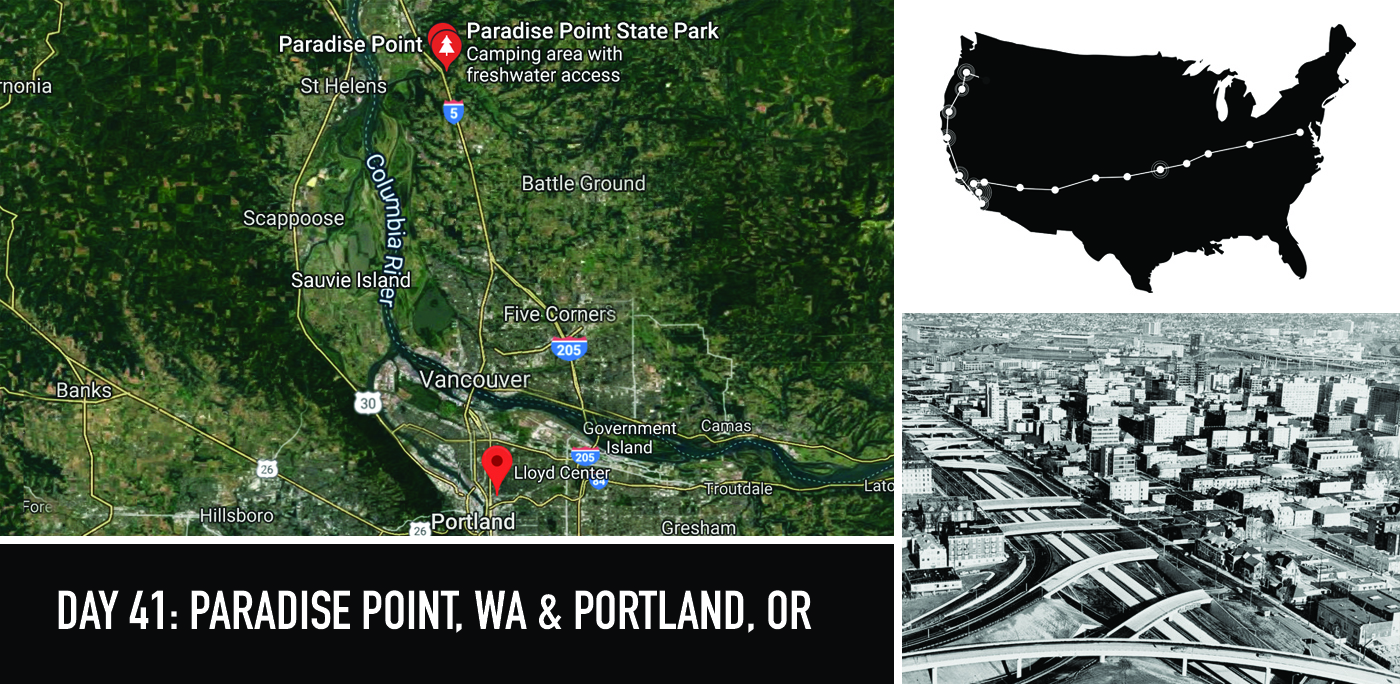
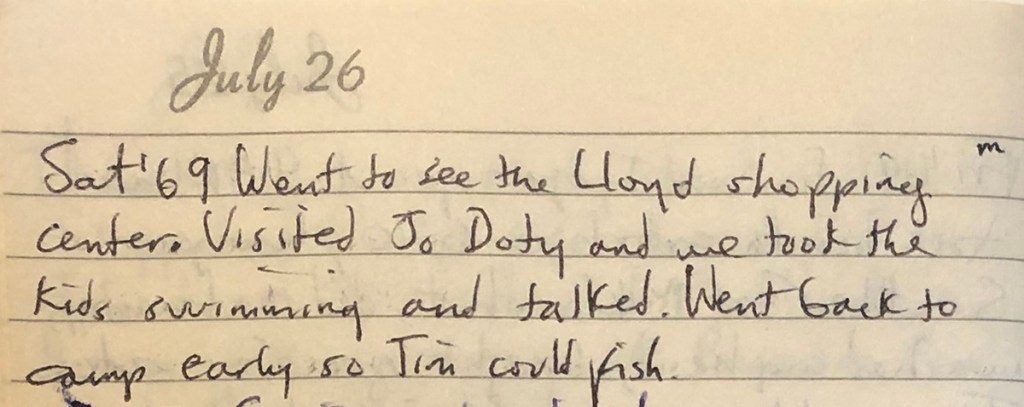
Went to see the Lloyd shopping center. Visited Jo Doty and we took the kids swimming and talked. Went back to camp early so Tim could fish.
Marge Binder, July 26, 1969
A few things here. Jo Doty was Mom’s roommate at Central Michigan when she and Dad met.
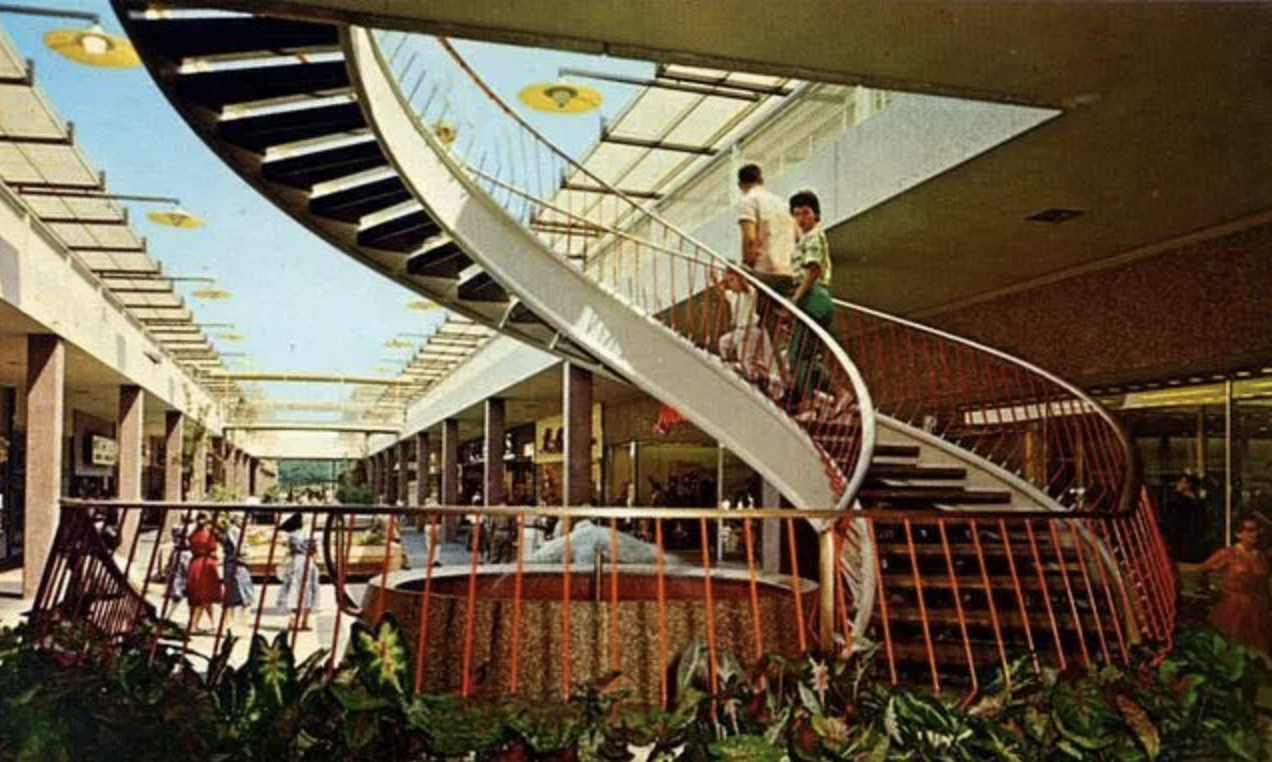
As for the Lloyd Shopping Center, it was a big deal! For a while it was the largest shopping center in the country. Huh, an open-air mall in rainy Portland: Genius! Someone finally figured out that a roof might help with the shopping experiences. Happily, it is indeed now enclosed.
Also, Tim fished.
The Price of Things…
It’s no surprise that prices increase over time, whether due to inflation or compassionate corporate stewardship. Here’s a sampling of some key items for families, including the ingredients for a killer cheese sandwich, a roadtrip staple.
ITEM
1969 Average
2019 Sampling/Average
Loaf of bread
$0.23
$2.19
Velveeta
$0.68 (on sale! see below)
$7.98
Yellow mustard
$0.34
$3.43
Gallon of gas
$0.32
CA:$3.84 MI:$2.75 VA:$2.49
Dozen eggs
$0.62
CA: $2 MI: $0.48 VA: $0.98
A&W Papa burger A&W Mama burger
$0.95 $0.55
$3.99 $2.99 (only in Canada!)
In-state college tuition
$1410
$20,150
Movie ticket
$1.42
$13.49
Annual wage
Men: $6,860 Women: $2,250
Men: $38,900 Women: $24,900
Dollar
$1
$6.92
A late addition here, and I couldn’t get this table to update:
The first KOA in Billings, Montana charged $1.75 when it opened in the mid-60s. I just tried to book at the same place for a tent campsite. $55 a night! Maybe the campground business IS the future!
Back on June 26, I showed you how you could buy yourself a KOA. Too easy? Then check out how to BUILD one.
Waited for Tim & Doug to return from fishing. Drove to Jo’s and we went to the beach for a picnic—2 hours plus drive but it was beautiful. Saw 2 accidents on the way home. Tim stayed at camp and caught several more large bass.
Marge Binder, July 27, 1969
This is the first time Mom mentions car accidents along the way. The data in the chart below shows that Americans are driving almost 3-times the miles we were in 1969, and traffic deaths are less than half of what they were. Some of the other numbers aren’t as encouraging. For more happiness, check out the National Highway Traffic Safety Administration’s website.
Some other fun facts: When it comes to the deadliest states for highway travel, you might want to avoid South Carolina and Mississippi. But I probably didn’t have to tell you to avoid those places. You’ll drive more miles without dying in a fiery collision in Minnesota and Massachusetts.
For cocktail chatter, mention Henry Bliss, the first person killed by a motor vehicle in the US. There is a plaque at 74th and CPW in New York City to commemorate the fateful moment when he stepped off a street car and into the path of a taxi in 1899.
Roadtrip Movies: Part 2
In the post two days ago, I introduced the first in a series recounting the best films about roadtrips. Scroll back to check out some of my Siskel & Ebert psycho babble, the definition of a roadtrip film and some pointers from Aaron Sorkin. You can also review my list of five movies in which the roadtrip leads nowhere.
Given today’s blog topic “Drive Safely,” I thought it’d be fitting to take a look at roadtrip films with a body count — auto bodies and otherwise. Herewith…
Honorable Mentions: Movies with a Body Count — Automotive and Otherwise
“The Blues Brothers” 1980
It didn’t even occur to me to include this when I jotted down a list of roadtrip films a few months back. That might be for two reasons: 1) Is this a roadtrip or a musical? Or both? Are there any other roadtrip musicals? …and 2) the forward momentum of this film is interrupted every few minutes by a car crash of epic proportions. It’s like a Greek tragedy on wheels in Chicagoland: their journey starts at the gates of a Joliet jail and careens through a shopping mall, diners, churches and orphanages, a Nazi rally, Bob’s Country Bunker, Chicago’s North Side and more. Ultimately, in good Greek roadtrip form, the Brothers get themselves to the Cook County Assessor’s Office (near that new Picasso) to pay the back taxes for the Penguin’s orphanage. Mission (from God) accomplished. And then they go back to jail. Along the way, we meet Aretha, Ray Charles, James Brown, Cab Calloway, John Candy, an armed and dangerous Carrie Fisher, Twiggy, as well as cameos by Steven Spielberg and Frank Oz. Next time you see me, ask me this: “Orange whip? Orange whip?” Do it.
“Duel” 1971
It can’t be easy to make a full-length feature about a truck chasing a car, especially when neither of them is a Transformer. But if you can make it really suspenseful and scary though, you deserve a long and storied Hollywood career. This was Steven Spielberg’s directorial debut, and the rest is history.
“The Great Race” 1965
This trailer didn’t age well!
I had this one filed under Screwball, but I will play it here. Jack Lemmon, Peter Falk, Natalie Wood and an ensemble of greats race from New York to Paris — the long way — and encounter a slew of smoky sabotage and relentless silliness, icy peril and epic pie fights. It has no reason to exist except for pure fun and good old fashioned vengeance. Professor Fate’s “Push the button, Max!” became one of the family’s random references in my youth.
“The Hitcher” 1986
What happens when C. Thomas Howell stops to give Rutger Hauer a lift in the middle of nowhere in the dead of night? Answer: I redouble my resolve to never pick up a hitchhiker. This one had an such an exquisite sinister appeal and a shocking body count, but I don’t remember how many of them were cars. RIP Rutger.
“Smokey & the Bandit” 1977
Great trailer!
To a nerdy 7th grader with horn-rim glasses, braces, acne and b.o., the Bandit was the idol of escapist idols. This film has everything: Burt Reynolds, a Trans-Am, CB radios, bootleg beer, a ride-along basset hound and lots of good-natured traffic violations and non-life-threatening vehicular pile-ups. It’s actually a pretty tight film – go fetch beer and come back — but it somehow has room for Sally Field, Jackie Gleason, Paul Williams and a gratuitous romp in the woods set to a Jerry Reed country ballad. I watched it again recently and damn if it doesn’t hold up after 40 years, if you can forgive some wince-inducing reminders of 70s culture.
And now, let’s drop this morbidity at the next exit and get on with our life-affirming adventure. Eastword ho!
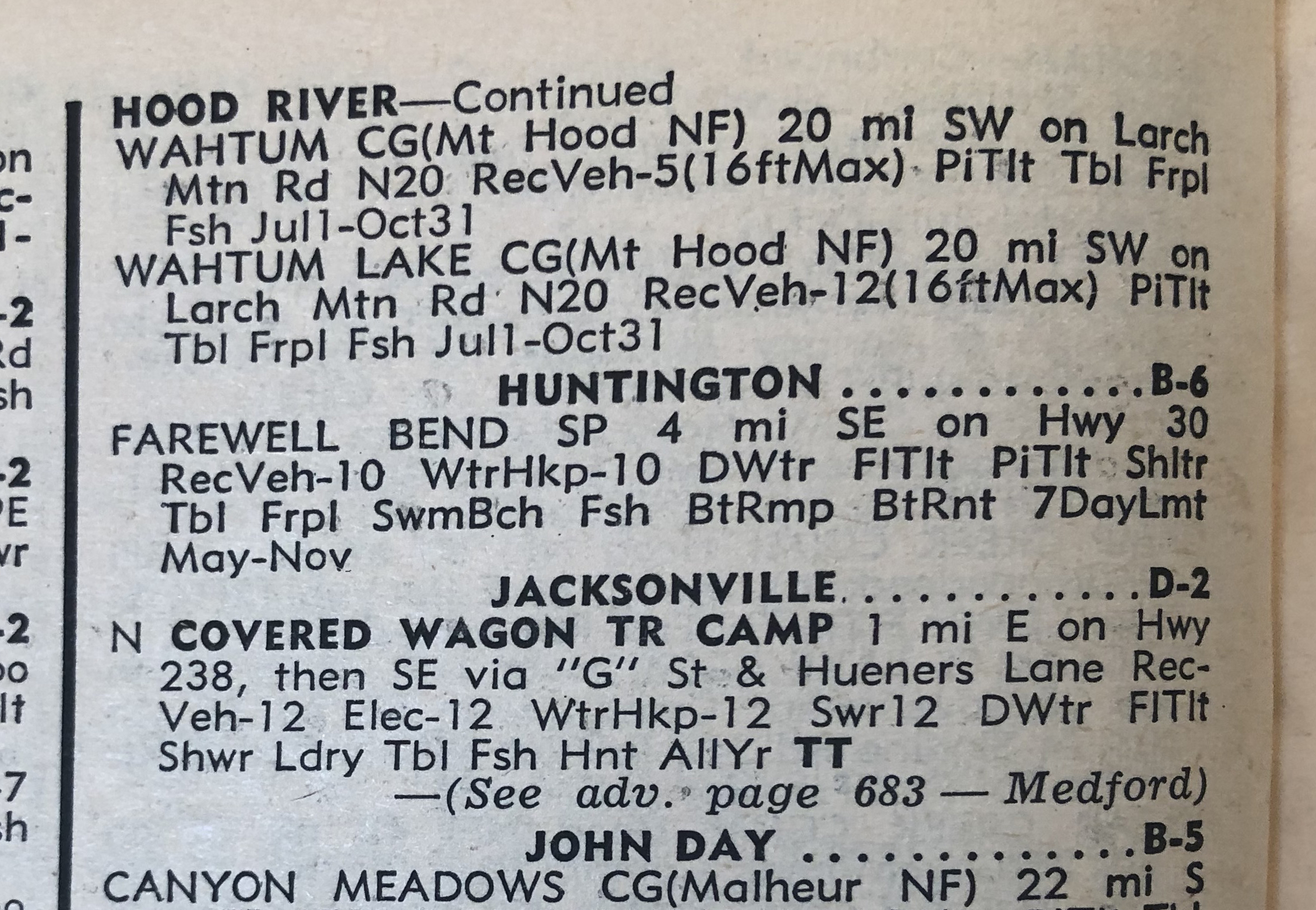
Doug kicked over a full [pee] can. Packed and drove across Oregon all day. Camped at Farewell Bend State Park on the Snake River. Kids swam and fished but it was a miserable site—slept in the car because of wind.
Marge Binder, July 28, 1969
‘Twould appear from Mom’s musings that I might have caused the toppling of a full jar of urine in the tent. I don’t remember that, and I’m not copping to it. When you’re the youngest, a lot of bad stuff gets pinned on you. It’s a real burden, it is.
If Mom’s account is true, I’m sure I had a reason.
“Es mejor que nada, baby!” Part 2 (or more likely Part 54)
Mom is not one to complain. Especially after six weeks on the road with three boys, one of whom recently tipped over the pee jar (or was unjustly implicated). So for Mom to call this campground a “miserable site” makes it clear: It must have been a new low.
Camping in a tent is typically not that comfortable. I haven’t done it in a while so I don’t know what tent innovations have been made. Back then, our tent’s floor, made of some sort of thin poly-something (cancerous? we’ll see), took on the contours of what was directly underneath. If it was jagged rocks, so was the floor. Concrete begat concrete. We had cotton/flannel sleeping bags that provided warmth, but not much in the way of support, aeration or water resistance.
I don’t remember this, but Mom recently assured me that we also employed air mattresses, inflated using the Chevy’s engine. She conceded, though, by morning the mattresses had deflated.
In the case of Farewell Bend, turns out we slept in the car anyway, due to the weather. For Maw, sleeping in the car with three boys must have been a whole ‘nother level of restful bliss.
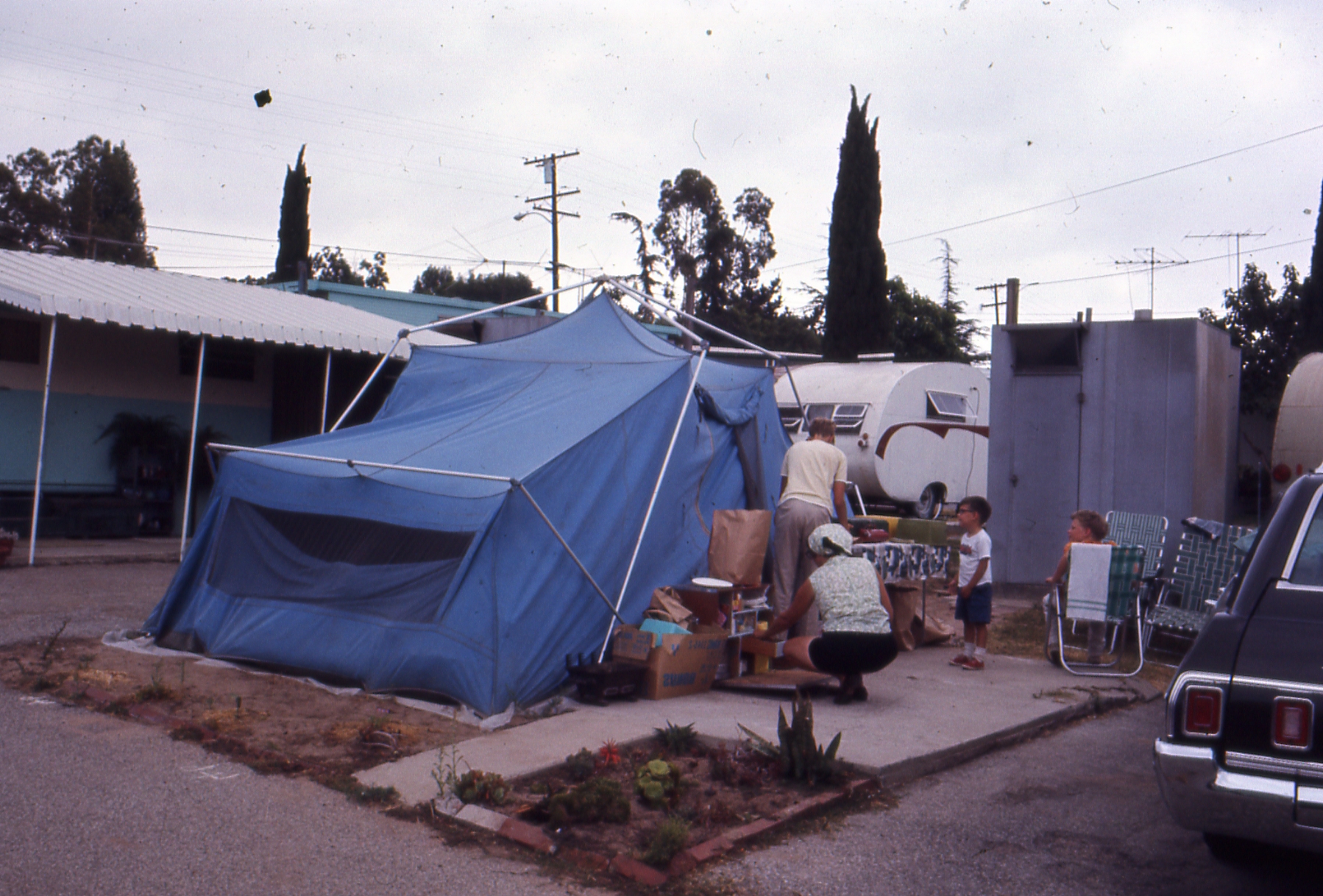
The above photo is likely NOT the Farewell Bend misery that Mom describes. I think she’d actually consider this a better-than-many situation — flat concrete slab, a garden bed, and there was an outhouse right there!
I know I’ve gone soft, but every time I look at this photo, my mind conjures up the lobby bar at any W or JW.
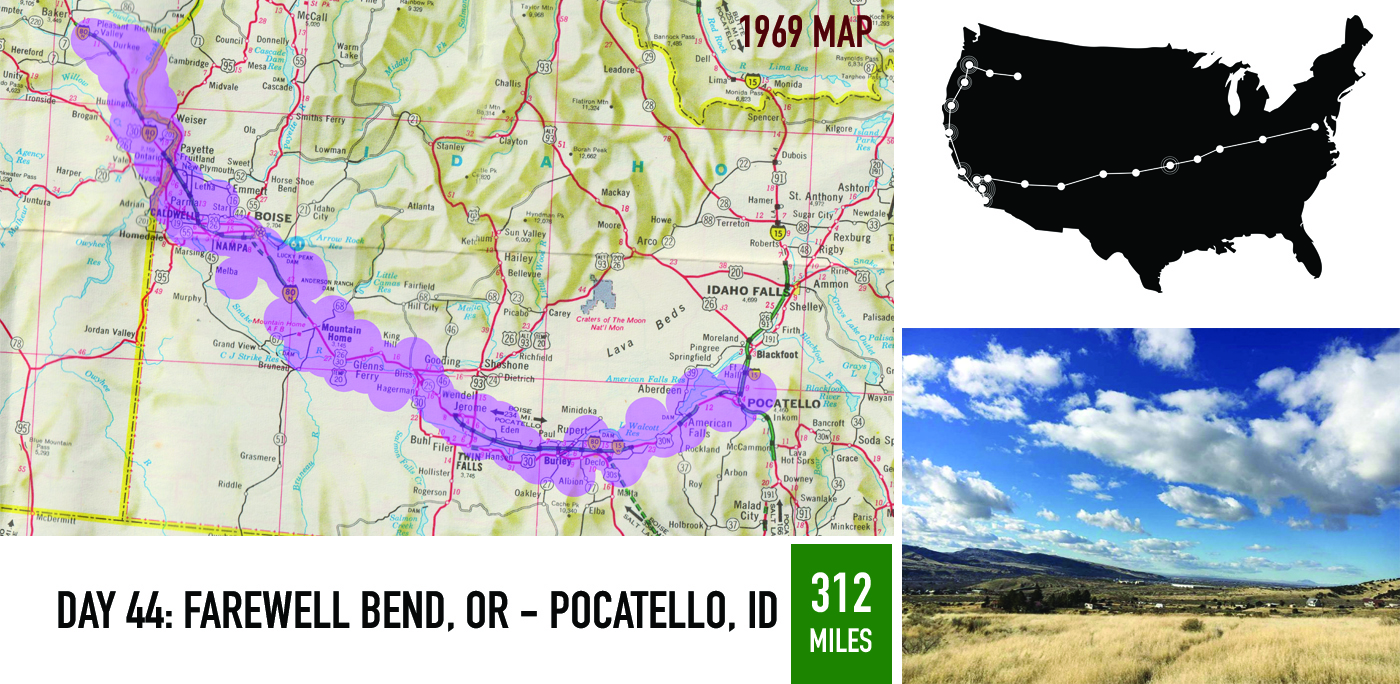
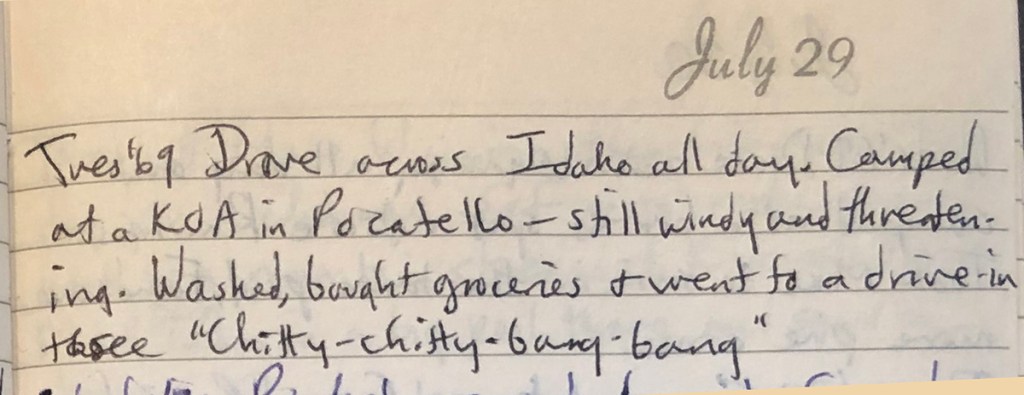
Drove across Idaho all day. Camped at a KOA in Pocatello—still windy and threatening. Washed, bought groceries & went to a drive-in to see “Chitty-chitty-bang-bang.”
Marge Binder, July 29, 1969
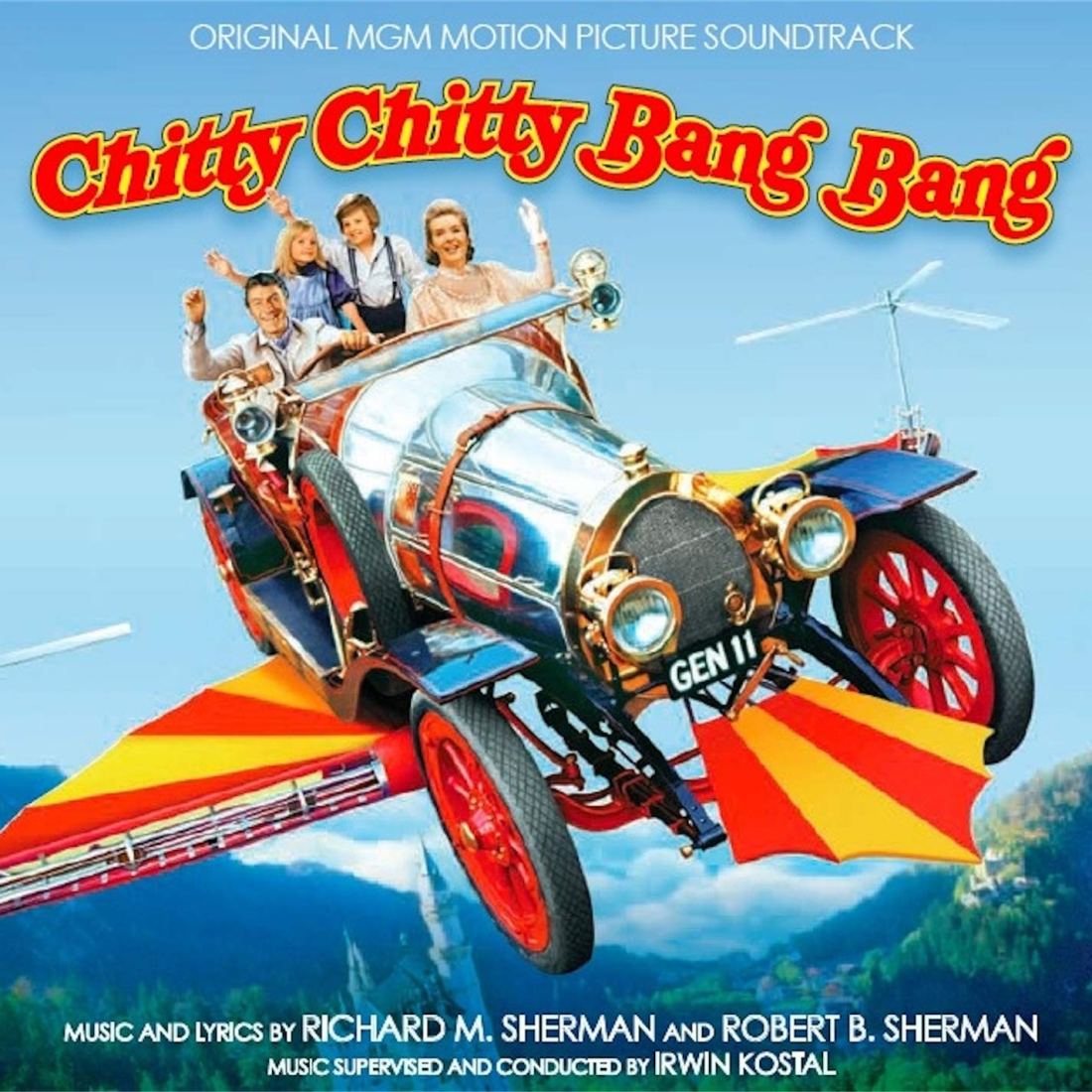
50 years ago tonight we screened “Chitty-Chitty Bang-Bang” at a drive-in near Pocatello, Idaho. As some readers might know, I’ve spent a couple of blog posts talking about roadtrip movies (and there are a few more posts in store as we head home). CCBB would seem to qualify: car and road. But I’m going to leave CCBB out of those posts and cover it here. And there is a reason why.
For decades, I was of the opinion that this film was a classic — a kid’s fantasy. There’s silly old people, candy factories, flying cars, a toy maker, a child-like king, humanoid dolls, fun sing-along songs and some scary-making moments: when that fugly guy with the gnarly nose reveals himself to the children not as a candyman but as a twisted, pervy kidnapper…that’s haunted my conscience ever since. It was so risky and revolutionary, right up there with Wizard of Oz, Willy Wonka and anything from Disney. Or so I thought.
So when I learned recently that Mary had never seen it, I was eager to fill her in on something very special, a gaping hole in her childhood.
WTF!
The plot is all over the place — literally and figuratively! Suspend all the disbelief you want, this thing makes no sense. I can’t imagine the chatter in the edit room, assembling this scene of a pontoon with that of a castle, this crude visual effect with that out-of-focus piece of stock. And no one in the movie seems fazed by any of it, no matter how ludicrous or random. Where is this going? And when will it stop?
I want to scream at the screen: “For the love of God, Dick Van Dyke, look into the camera and say, ‘I KNOW! But it’s too late!'” Just give me a sign that no one spiked my Kool-aid!
CCBB is less a roadtrip than an acid trip. A really bad acid trip. The kind that should scare you straight.
This place closed in 2007. Pocatello’s famous Sunset Drive-In Theater!
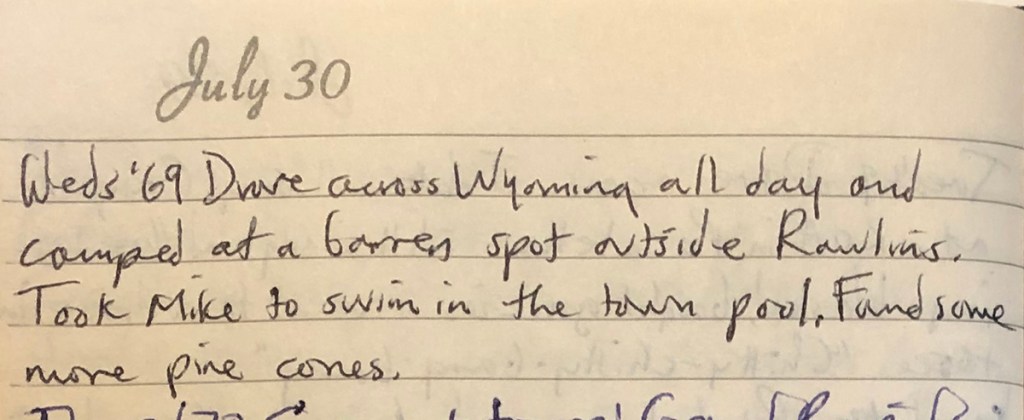
Drove across Wyoming all day and camped at a barren spot outside Rawlins. Took Mike to swim in the town pool. Found some more pine cones.
Marge Binder, July 30, 1969
Close observers might have noticed that Mom is hauling butt back east. 370 yesterday, 352 miles today.
What better time to revisit some roadtrip movie classics! We started all this back on July 25 with some introductory fluff and five roadtrip films that led nowhere. On the 27th, I rolled out a few of the crash-worthiest (in terms of body count, both human and auto). So far we’ve covered:
About Schmidt
Almost Famous
The Blues Brothers
Duel
The Great Race
The Hitcher
Sideways
Smokey & the Bandit
Thelma & Louise
Tommy Boy
Since Mom is driving us across Wyoming today, minus 50 years, how about we look at some roadtrip movies that are flat, dry and forgettable.
Okay, okay, there is some art in here, as well as some teenage angst, ribald college humor, forbidden romance, lepers and subtitles. Herewith…
Roadtrip Movies, Part 3: A Hodgepodge
“Little Miss Sunshine” 2006
I forgot all about this one. Greg Kinnear does that to me. It’s a fun little ditty that features Steve Carrell as a suicidal Proust scholar and Alan Arkin as an elderly heroin snorter. They, along with Tony Collette and Abigail Breslin, pilot a VW van to a kids’ beauty pageant. Some critics decried its undertones of child pornography and pedophilia. As I write this paragraph, I wonder how I could possibly have forgotten about this movie.
“O Brother, Where Art Thou” 2000
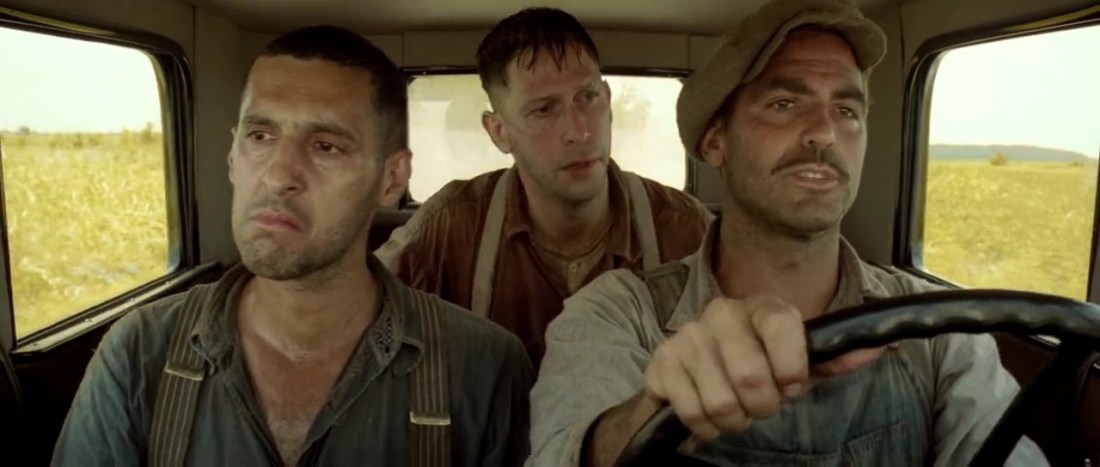
Is this really a roadtrip movie? I say yes. It’s a quest to get somewhere, loosely based on The Odyssey (which is not a roadtrip, per se). Updated for the 20th Century, the characters make their way across the South availing themselves of trains, trucks and cars, including one driven by Baby Face Nelson. Admittedly, I am biased to this Cohen Brothers’ opus; it’s one of those movies that I will watch any time, no matter where in the film I might tune in. Fun, smart, soulful, surprising and occasionally profane.
“Motorcycle Diaries” 2004
There are some nice moments in here, fueled by what makes a youthful roadtrip so thrilling — freedom, the open road, beauty and mystery. I know it centered on a young Che Guevara; that’s all I really, truly remember of it. And there were lepers.
“Y Tu Mamá También” 2001
NSFW
Another subtitled film that I mostly remember because I watched it in an air-conditioned art house in NYC that I frequented on many summer days. It’s rather saucy with an art-house-appropriate level of sexual tension and exploration. Still, it’s no “Little Miss Sunshine.”
“Road Trip” 2000
Tom Green is on the poster so I very nearly left it off the list. The title, though, made that hard to do. My advice: if this happens to come on your screen while you find yourself in traction, and the remote is out of reach, go ahead and give it a watch. It’s got some laughs.
“The Sure Thing” 1985
This epitomizes the 80s teen rom-com; interpret that for yourself. What’s at stake, initially, is unabashed prurience (in the visage of Nicolette Sheridan). That was aok back then. Of course we will grow and learn along the way, conveyed most acutely by a mirthful — and angst-sprinkled — three-minute montage, set to one of the decades most tender songs. (I actually don’t remember if that happens in this film, but how else would we have learned and grown?) Warning: John Cusack. Even so, it’s directed by Rob Reiner and the soundtrack is pure 80s bliss.
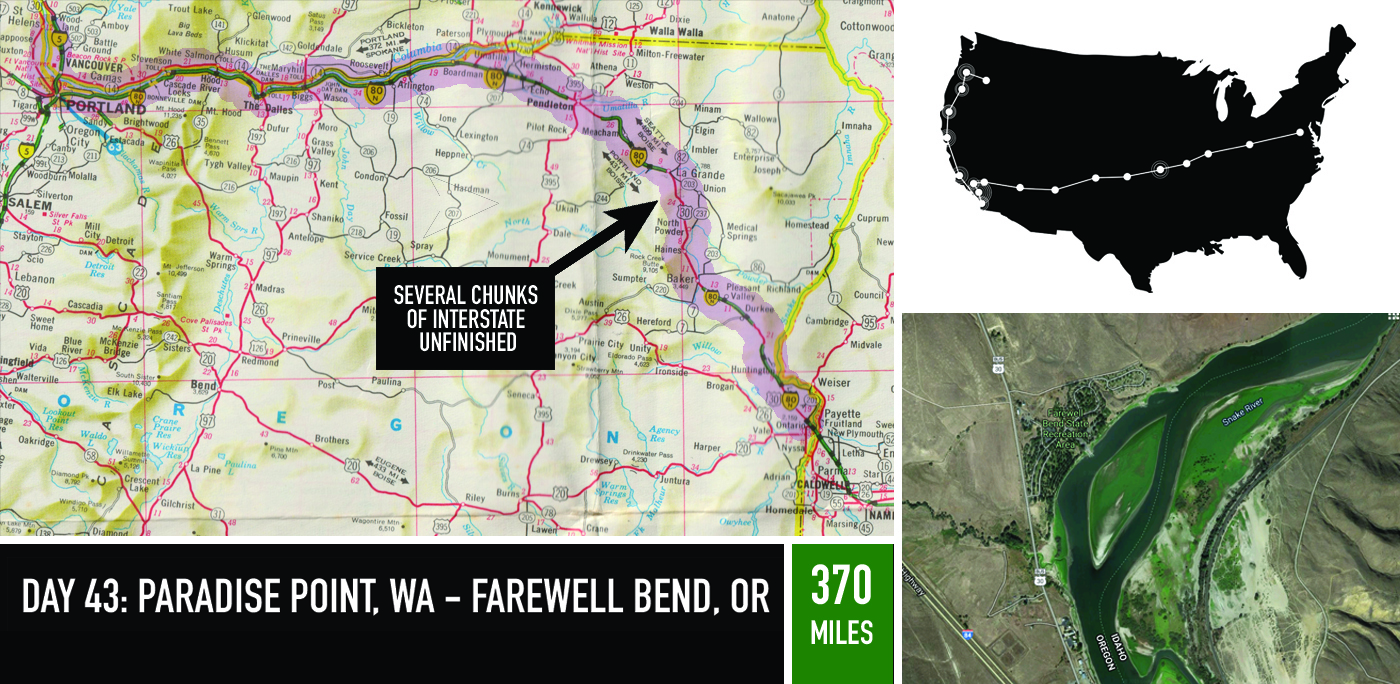
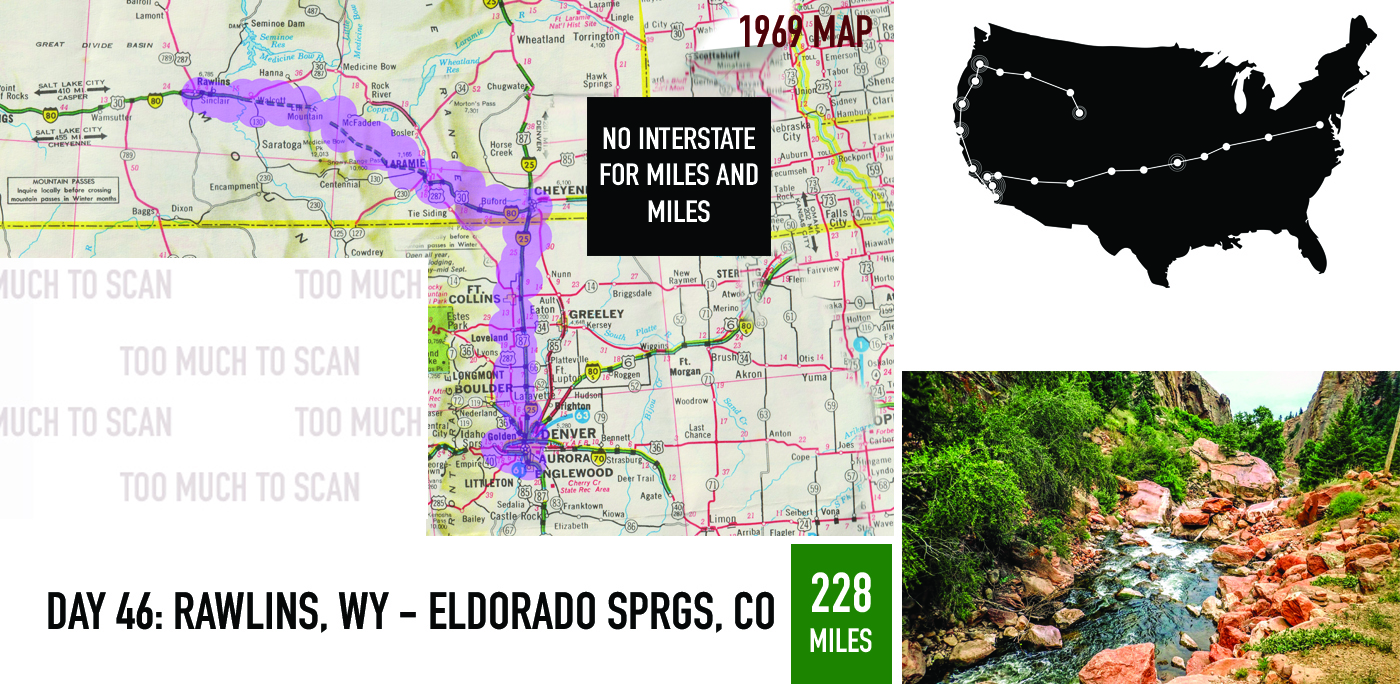
You can see (kind of) that much of the interstate construction was not complete in this area of the country.
Also, I spoke with Mom today, and she recalled that the “mountain stream” she describes here made her uneasy. She’d seen flooding before and she worried that, because we were perched on a bend, just a bit of a rise might wipe away our tent.
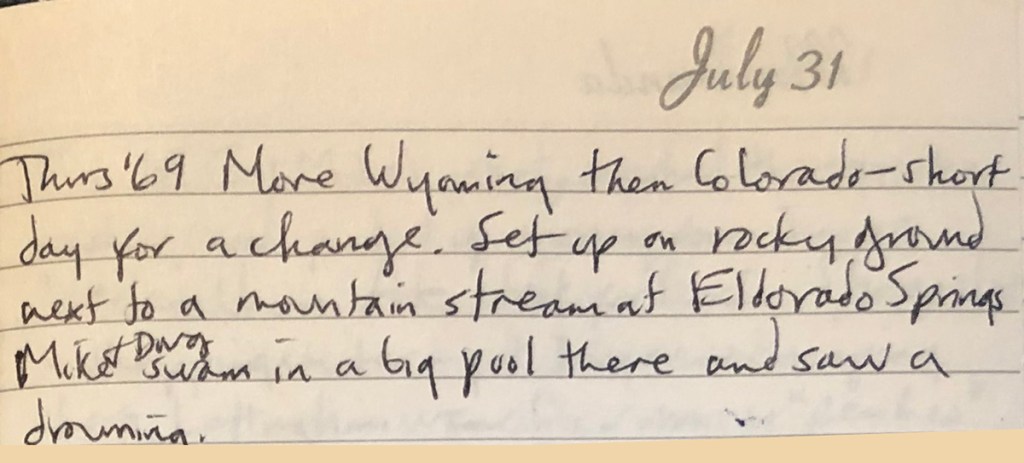
More Wyoming then Colorado—short day for a change. Set up on rocky ground next to a mountain stream at Eldorado Springs. Mike & Doug swam in a big pool there and saw a drowning.
Marge Binder, July 31, 1969
This appears to be a recent photo of the “nationally known swimming pool,” and it still has a diving board!
This episode I (think I) remember. Great pool, lots of kids, lots of activity, Mike and me splashing about. And then everything stopped. Silence. Something weird was going on.
It’s one of those memories, like the Redwoods and “Bomb Cambodia” a few weeks back, where I might be melding it with others. As I recall, this sad occasion is when Mom offered the advice: Don’t swim for an hour after eating. If it did happen like this, it was brilliant of her, because I still subscribe to that advice today.
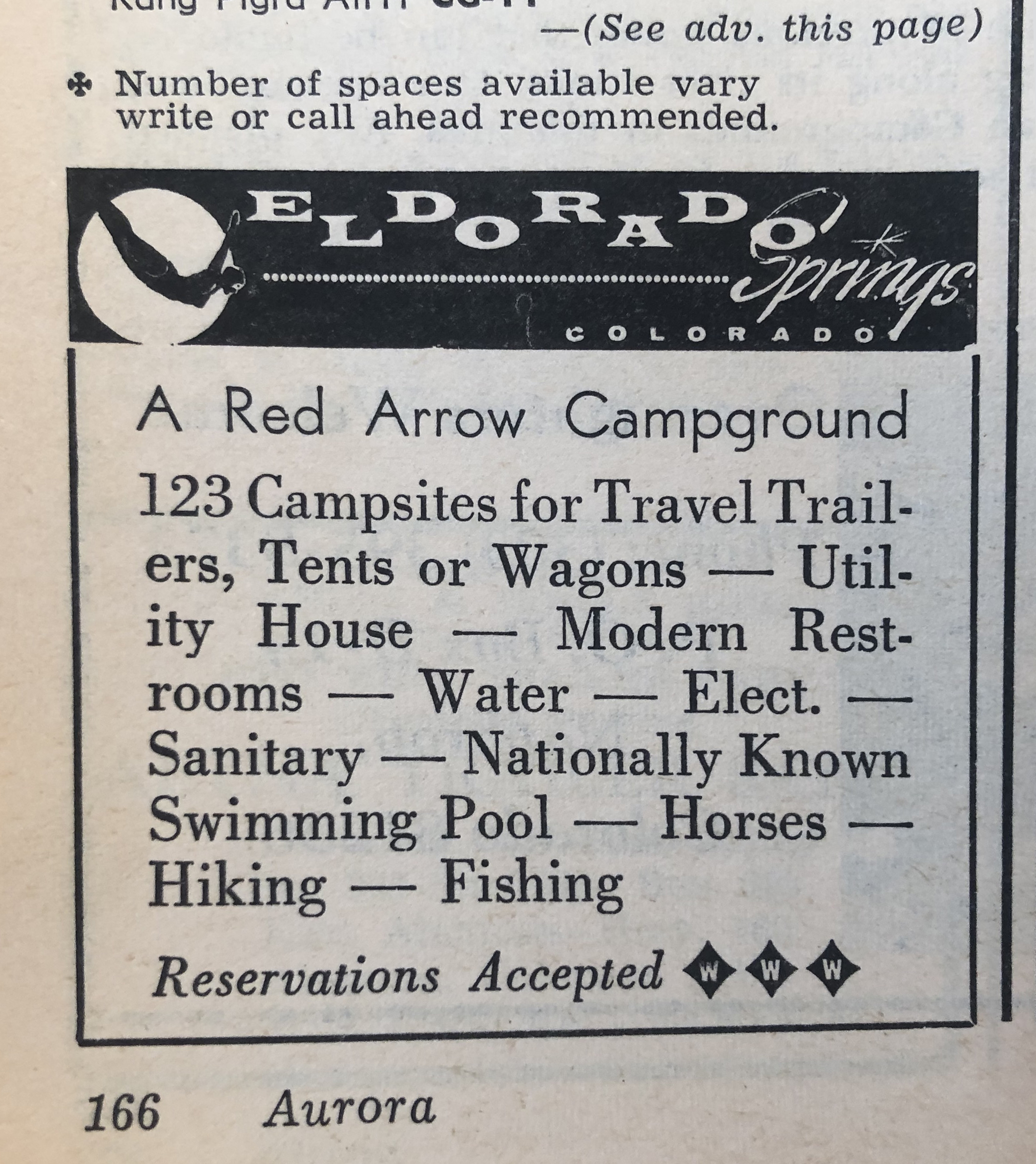
Mom picked a great place to spend a few days (note the three Ws in the ad below; that’s Woodall’s highest rating!). I don’t remember anything else, but her diary lists out Mike’s allergy shots, shopping and some car maintenance. I have to think there was also plenty of hiking, playing and other things that make childhood childhood in a place like Colorado.
Sorry for that kid though.
I love that the ad for the campground welcomes “wagons.” I’m picturing a wagon train emerging Brigadoon-style from a dust storm on the prairie and finding this place most welcoming. Act II: Everyone is strung out on “modern restrooms” and “sanitary.” Act III: We’re staying.
Also, as I mentioned above, the place had a “nationally known pool.” Gotta say, the only other that can boast that is the Reflecting Pool in DC. I don’t recommend diving.
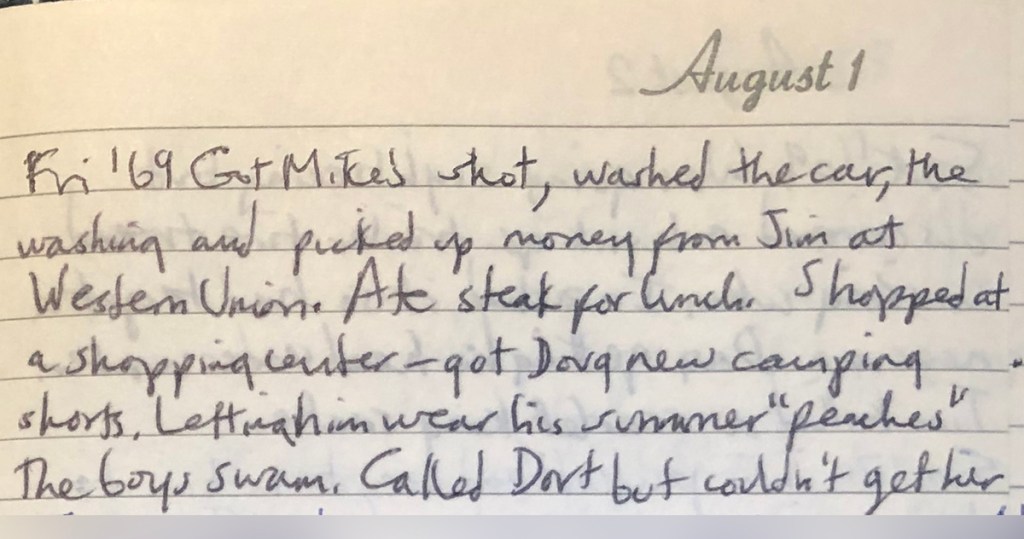
Got Mike’s shot, washed the car, the washing and picked up money from Jim at Western Union. Ate steak for lunch. Shopped at a shopping center—got Doug new camping shorts. Letting him wear his summer “peaches.” The boys swam. Called Dort but couldn’t get her.
Marge Binder, August 1, 1969
There’s a lot to unpack here, no pun attended.
Dort
My Aunt “Dort” Dorothy was the oldest of my Dad’s siblings. She was a judge in the Denver area and a revered character in our Family. She was a protector and champion of Dad since childhood, and Tim greatly respected. She passed away just last year. Sadly, I never met her.
“Peaches”
Not a clue what this means. Mom claims not to recall. It’s probably best we leave it at that.
A Different Time
How much the world changed since 1969, some of which we’ve explored on this scroll. One detail of today’s diary entry references calling [Aunt] Dort but “couldn’t get her.” That’s what happened back then, before even simple technologies like answering machines. You call someone, they don’t answer, you move on. In this case, you drive on home another 2,500 miles and don’t see them for decades.
And Western Union is a blast from the past. I’d practically forgotten about them.
Money Handling in 1969
This is the first time Maw cites a means of finances — a stop at Western Union to pick up a money wire from Dad. Western Union (or WU, as it calls itself in its umpteenth rebranding since then) was the world’s largest provider of telegraphic services — telegrams. In doing some cursory research for this blog, I was surprised they’re still thriving in niche but modern markets.
As for how Mom managed money on this long trip, she offered some insights recently. Credit cards were not so in vogue yet. Debit cards were still 25 years away. I was surprised that Maw didn’t use travelers’ checks on this trip. She traveled with a checkbook but few banks would cash them; the big chains didn’t cover the whole country yet, or were few and far between, or were open only during “banking hours.”
Maw tells me she kept a few hundred dollars in cash to cover things, from gas and food to lodging and doctors. I suppose that’s a pretty straightforward way of doing things, but it certainly doesn’t feel secure by today’s standards — as ironic as that sounds.
Also, note in Mom’s diary what happened right after fetching the cash: “Ate steak for lunch.” That’s just how she rolls!
ATMs and Beyond
Can you imagine living without ATMs? This Gen-Xer cannot. 25% of Boomers, though, don’t use them at all.
A Chemical Bank on Long Island brought America’s first ATM on-line in 1969, advertising the occasion thusly: “On September 2, our bank will open at 9:00 and never close again.” (Get ready for the 50th anniversary of that next month!) The machines were first called Docutellers after the company that innovated the technology, Docutel. Today, there are more than half a million ATMs in the US, one for about every 650 people.
These days, of course, lots of people can live without ATMs, thanks to mobile apps, blockchain and even cryptocurrencies. I’m sure their recollections of these innovations 50 years from now will sound as stale as my defense of the ATM.












 Marge Binder's Epic Adventure