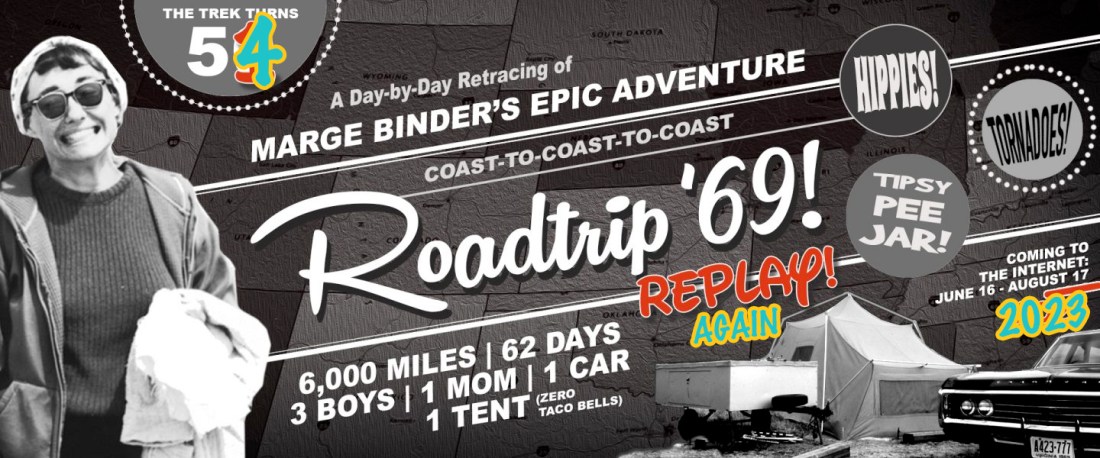
54 years ago, my Mom loaded her three sons into our brand-new Chevy station wagon and lit out from Virginia to California to Michigan and back. Maw called it 62 days under canvas.
A few summers back, I put together this blog to mark the 50th anniversary. I’d intended it to be nostalgic. Now that the world is where it is, this has taken on all-new significance — the great outdoors, exploring new cultures, lots of personal interaction. Nostalgic indeed.
It’s is a day-by-day recounting of the nine week trip, including excerpts from Maw’s diary (with permission), old-timey paper maps and AAA tour books purchased on Ebay, as well as photos and impressions of those who were transported and transformed.
I asked her, as part of this exercise, why did she do it. Simply, “I wanted to go to California.” And so she and her boys did.
Maw passed away three years ago, but thanks to the internet–and my heart–her spirit lives on.
Note: This is NOT a new road trip. It is a recounting of the one that happened 50 years ago.
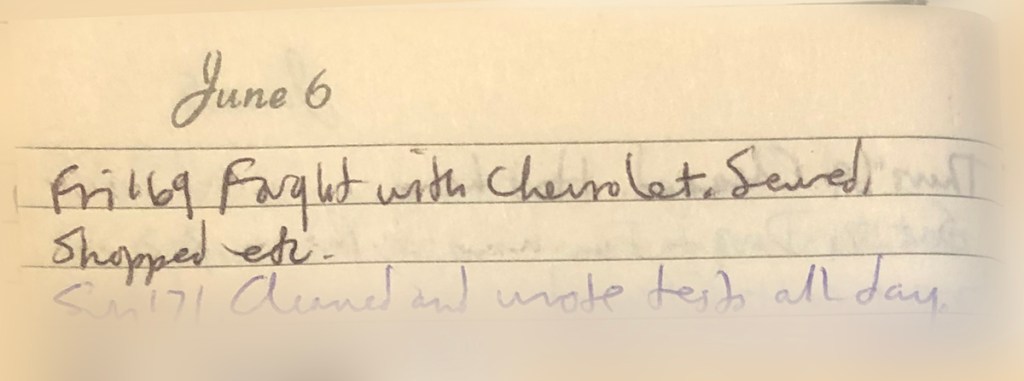
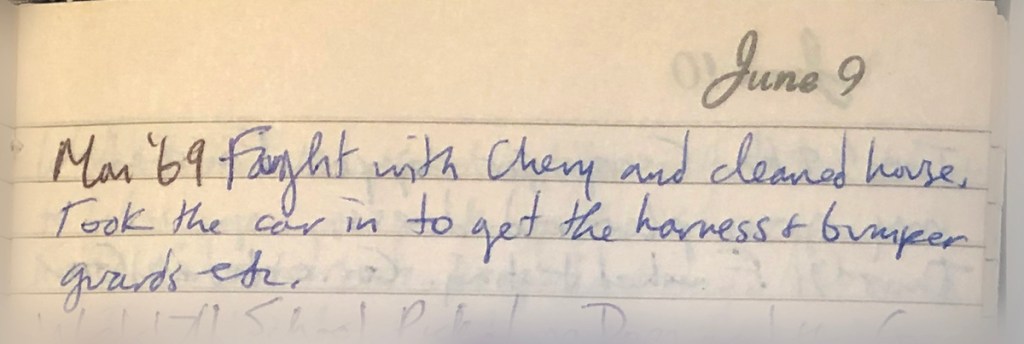
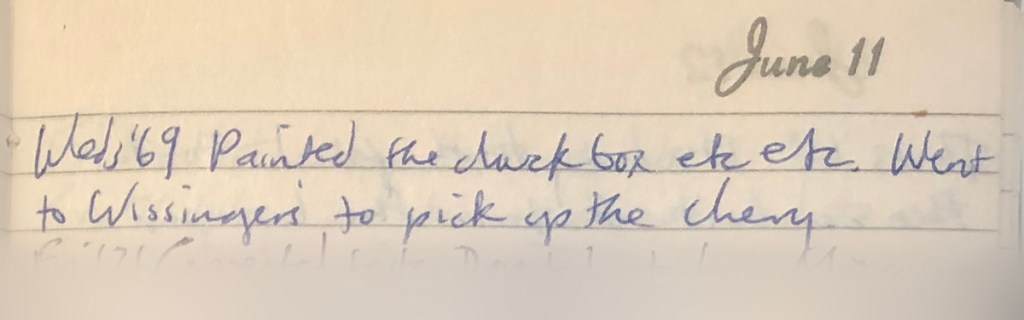
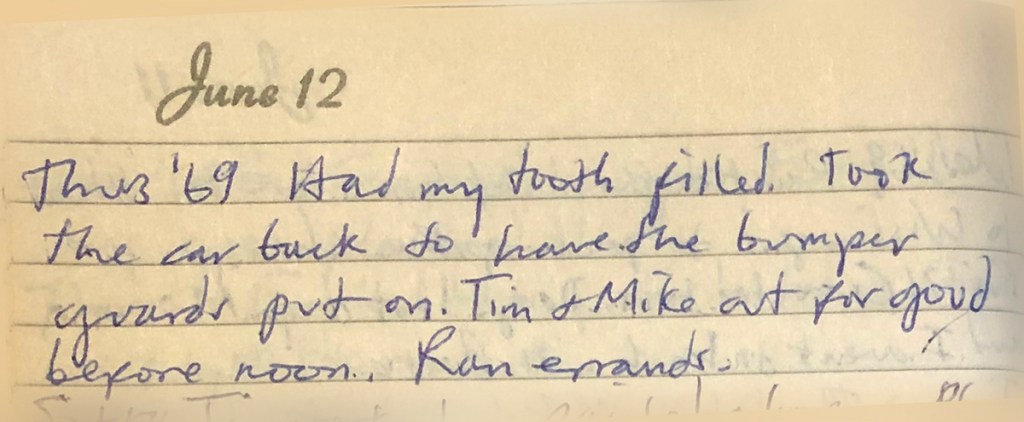
In the days leading up to June 16, and the official launch, Mom offered very little insight or anticipation about the trip. Her diary lists the mundane errands and everyday tasks. Mike and Tim finished school, she visited the dentist, hosted a neighbor for coffee.
She also mentions fighting “with Chevy” and “fought with Chevrolet,” I suppose about repairs and upgrades needed for the relatively new station wagon that would carry us across country. It would also serve as sanctuary during especially bad storms at night.
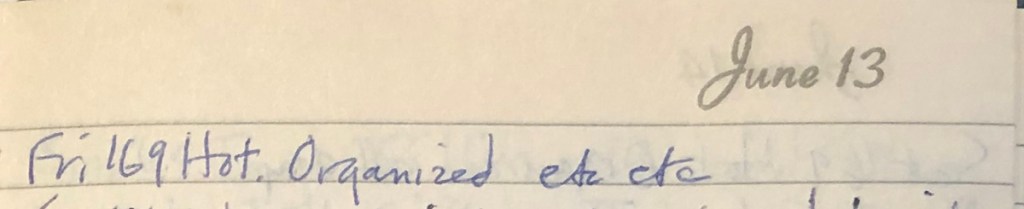
On the 13th and 14th, Maw was concise and repetitive: “Hot. Organized all day…etc. etc.”
No where in here does one get the impression that Mom was concerned or excited about the nine weeks that lay ahead.
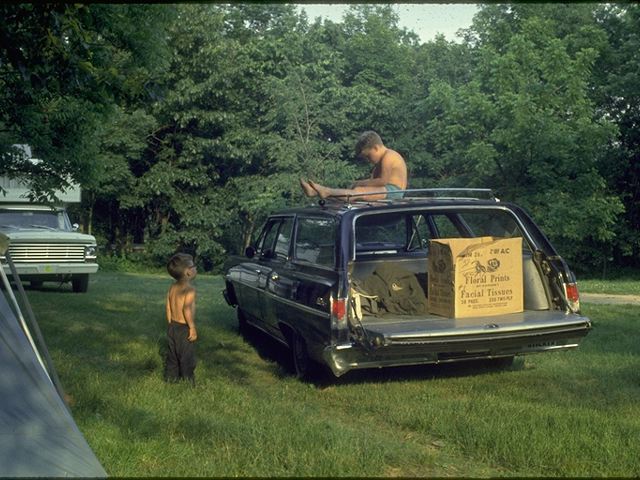
Throughout this blog you will find photos whose origin are in question but that also bolster the narrative in an authentic way. That’s me, my brother Mike and the Chevy, along with some cargo. I cannot confirm it has anything to do with this trip.
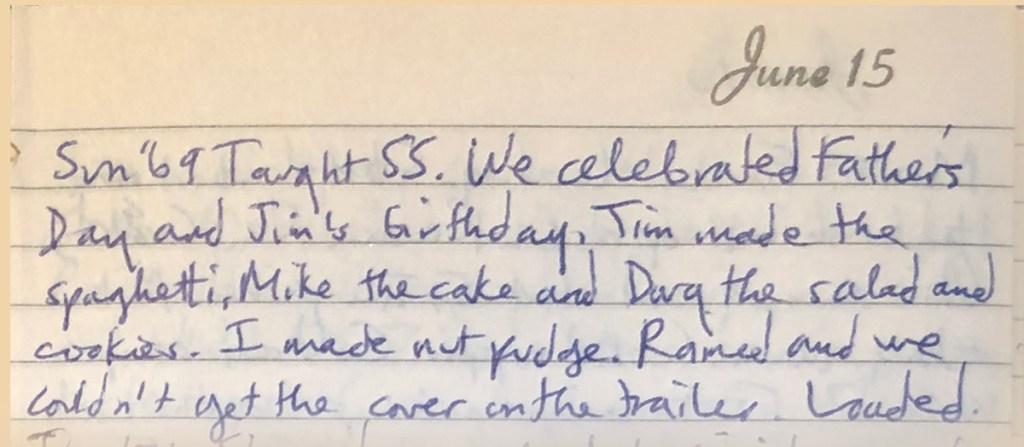
On the 15th, she covers Father’s Day and the meal she cooked. Her writing ends with, “Loaded.”
I’ve always been fascinated by the interstate highway system — the scale of the vision, the resolve to get it done, the fact that it did get done. I actually have a favorite interstate: the beautiful and elegantly contoured I-280 from San Jose to San Francisco. Fun fact: It wasn’t near complete in 1969.
Another fun fact: 15 miles of my commute on the lovely I-680 in the east bay is now under panic-inducing construction, providing a magical reminder that the system will never truly be done. My tax dollars at work. Indeed! But I digress.
As you probably know, President Eisenhower gets credit for thinking big and delivering in the 50s (though the concept arose in the 30s). By then, the automobile was ubiquitous, and the timely combination with wider, smoother, longer roads made Americans truly mobile. Here’s a new book out about the history (and future) of motoring across this great big land of ours.
And of course, all of this was romanticized by our friends at Chevy. Cue Dinah Shore!
See the USA in your Chevrolet America is asking you to call Drive your Chevrolet through the USA America’s the greatest land of all On a highway, or a road along the levee Performance is sweeter Nothing can beat her Life is completer in a Chevy So make a date today to see the USA
And this next spot from 1972 was practically inspired by Marge Binder’s Epic Adventure but with more…er, Native Americans.
Most of the interstate network was completed by the time of our trip, but there were still big stretches through the midwest and northwest that were connected by older highways and blacktop, including the famed Route 66. And, of course, the interstates weren’t yet teeming with services like fast food malls, motels and major travel centers.
Here’s a great site for satisfying your inner highway geek, including addressing a few myths about the program.
Started about 10 again. Had breakfast “out” but then a tailgate picnic for lunch. Went through a lot of rain in Indiana. Stopped at Bauer’s Bonanza in Smithboro, IL about 5 and swam & fished and cooked out. Cleared and was lovely evening. Called Jim and Momma.
America’s “main street” Route 66 was still thriving in 1969, but it was slowly being paved over by I-40. I don’t really remember it from our trip, but I’ve been told that, much like Marilyn Monroe, it’s reputation has been inflated and romanticized beyond recognition. Even so, you can still enjoy some of the kitsch the next time you choose to drive across the country.
And you can forever enjoy the stylings of Nat King Cole.
Road Tripping: By the Numbers
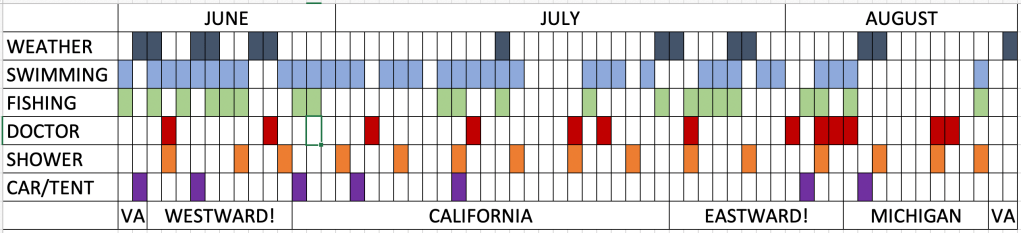
Here’s what happened each day along the way, according to Mom’s diary. I have a feeling there was even more swimming and fishing, medical issues and maintenance on the car and tent. But Maw is not one to kvetch.
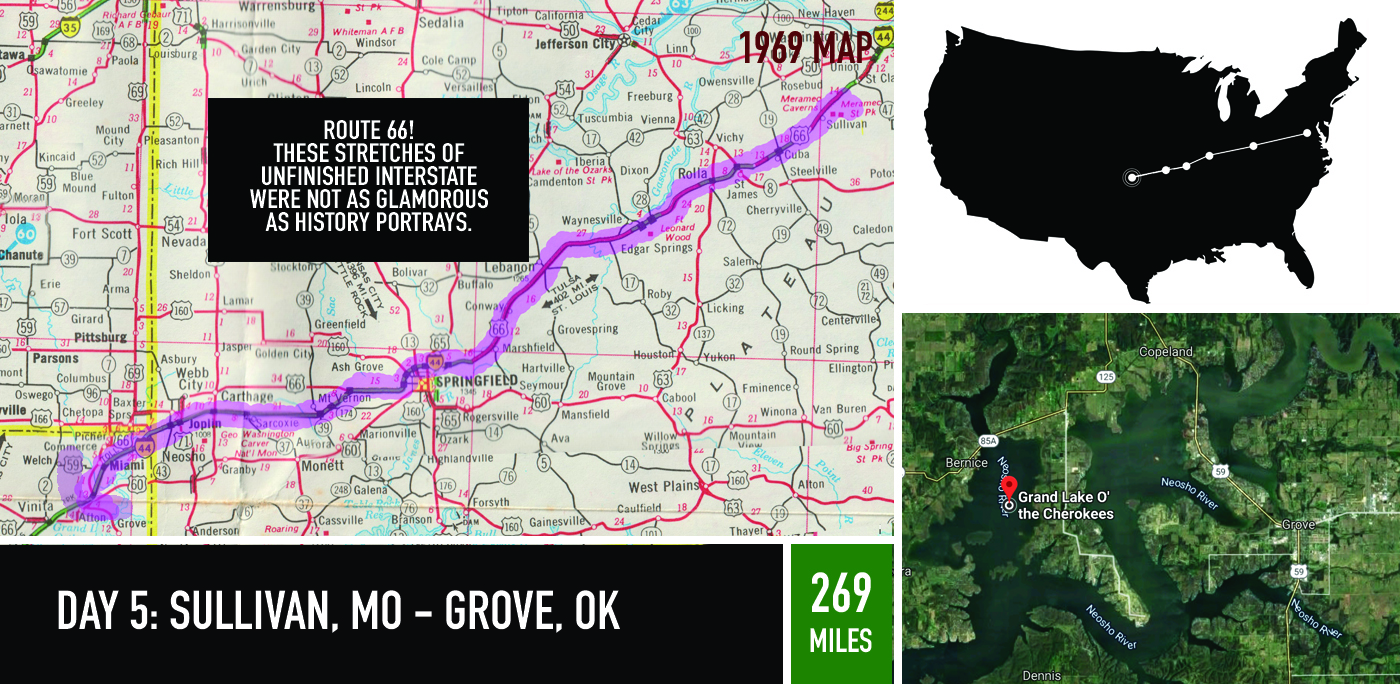
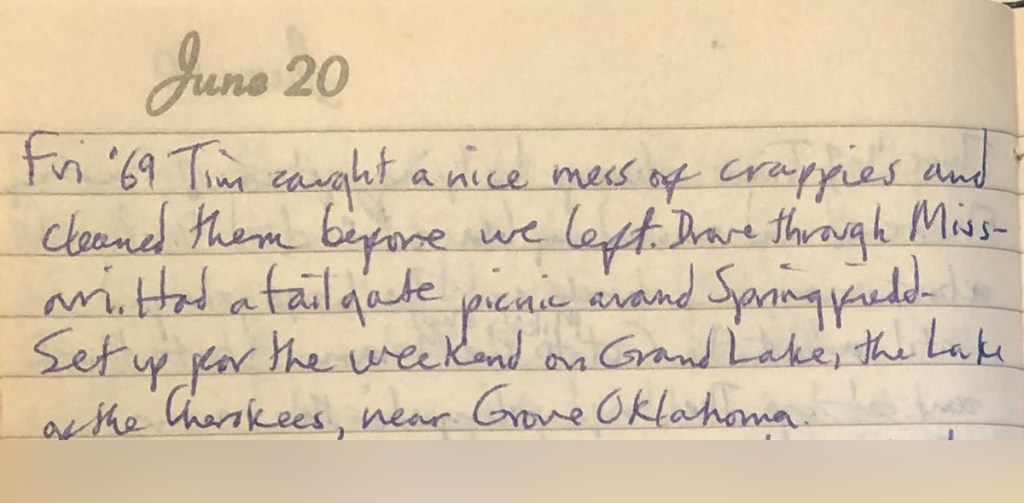
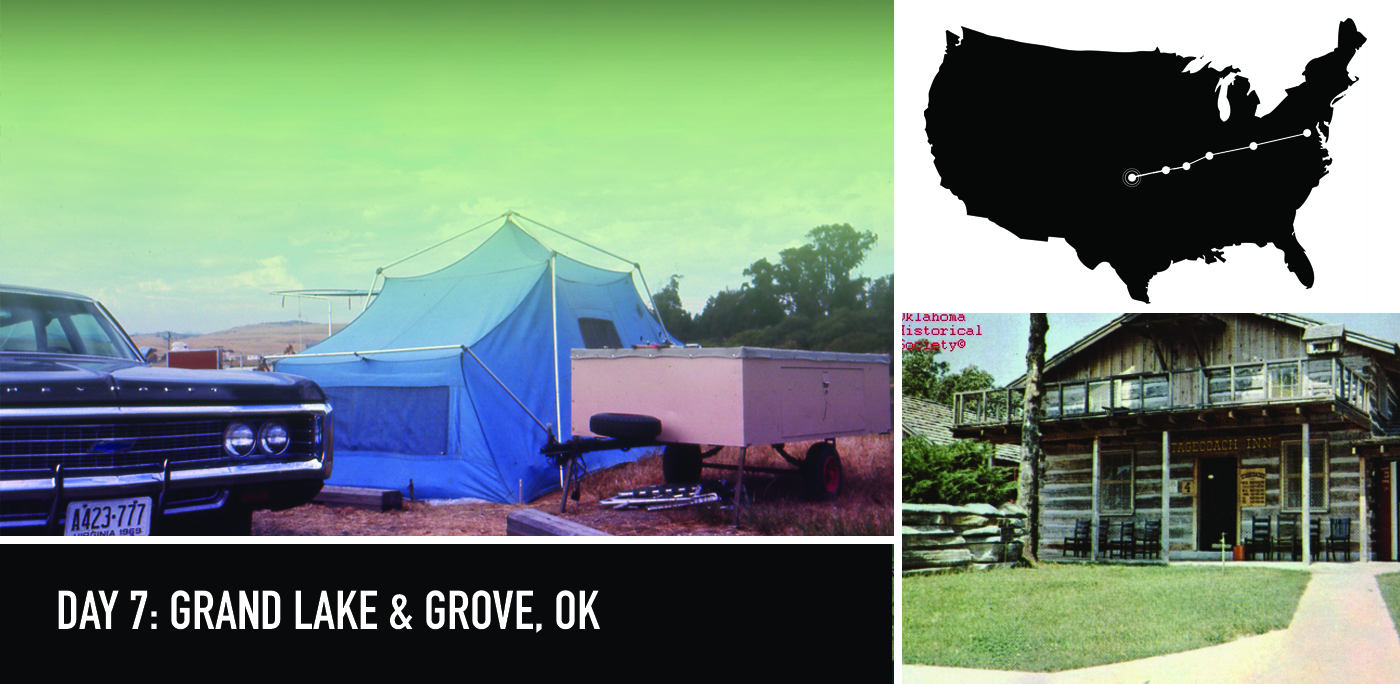
Tim caught a nice mess of crappies and cleaned them before we left. Drove through Missouri. Had a tailgate picnic around Springfield. Set up for the weekend on Grand Lake, the Lake of the Cherokees, near Grove, Oklahoma.
Marge Binder, June 20, 1969
You can check out the latest from Grand Lake here.
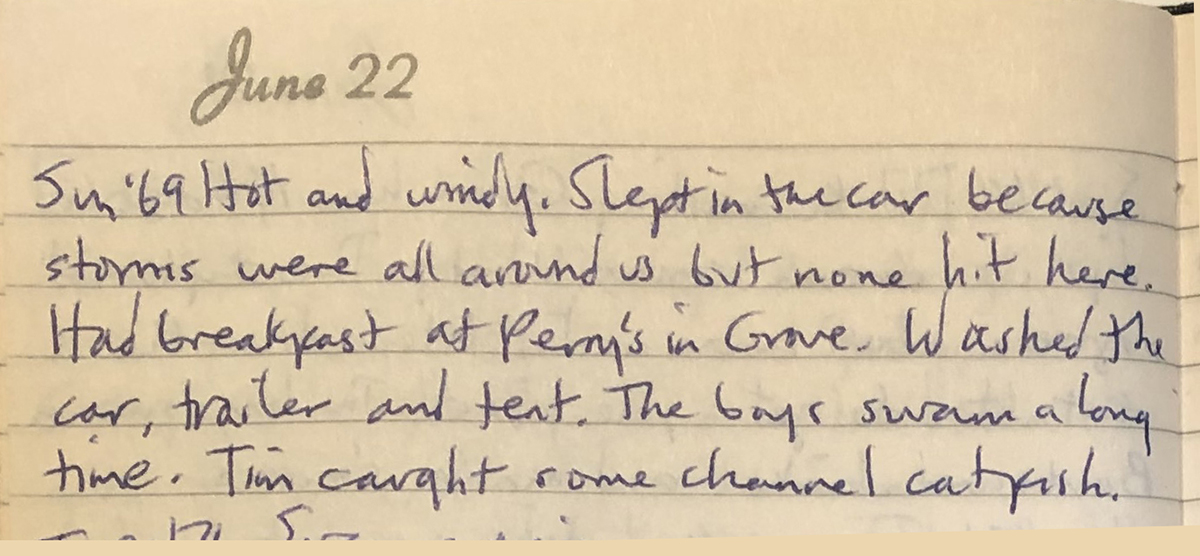
Hot and windy. Slept in the car because storms were all around us but none hit here. Had breakfast at Perry’s in Grove. Washed the car, trailer and tent. The boys swam a long time. Tim caught some channel catfish.
Marge Binder, June 22, 1969
There are a number of references Mom makes in her diary to businesses that no longer exist, not even on the internet.
In putting together this blog series, I reached out to various chambers of commerce and historical societies in places like Grove, OK and Lomita, CA without much luck. I also scoured Pinterest sites for like-minded amateur historians. That’s been fun but largely fruitless. And to those who assumed that this project involved me physically retracing the steps and stops of the 1969 journey I say: I’m obsessive to learn more, but not that obsessive.
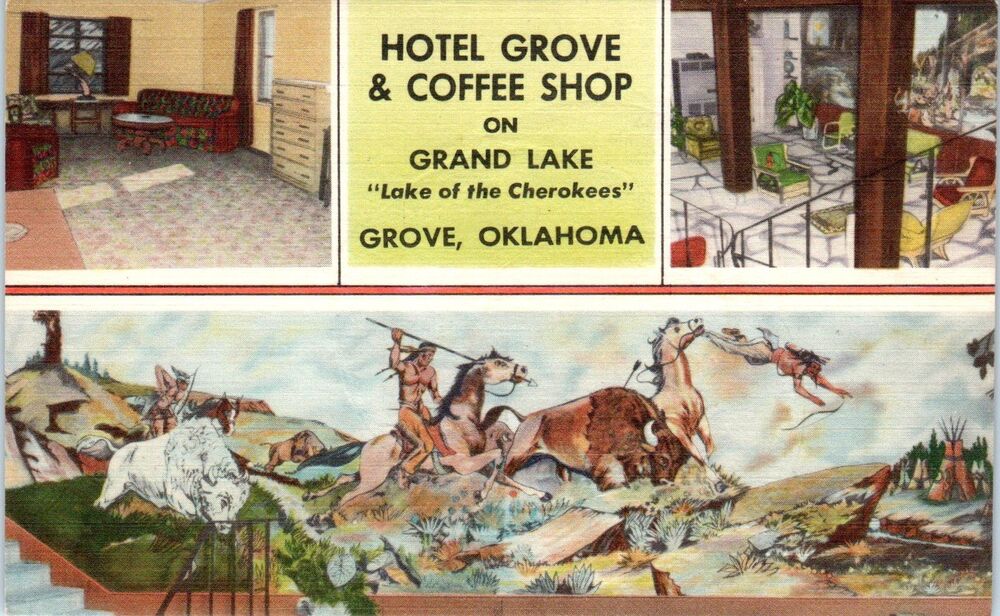
If you’re interested to learn more about Grove, OK in the 21st Century, click here. And enjoy this postcard that captures Grove’s colorful history.
Got the wheels balanced. The Guys had a swim before we left at noon. Also cooked a big breakfast in spite of a balky stove. Stopped at Sears in San Bernardino. Drove way up in the mountains to Crystal Lake, a federal campground.
Marge Binder, June 28, 1969
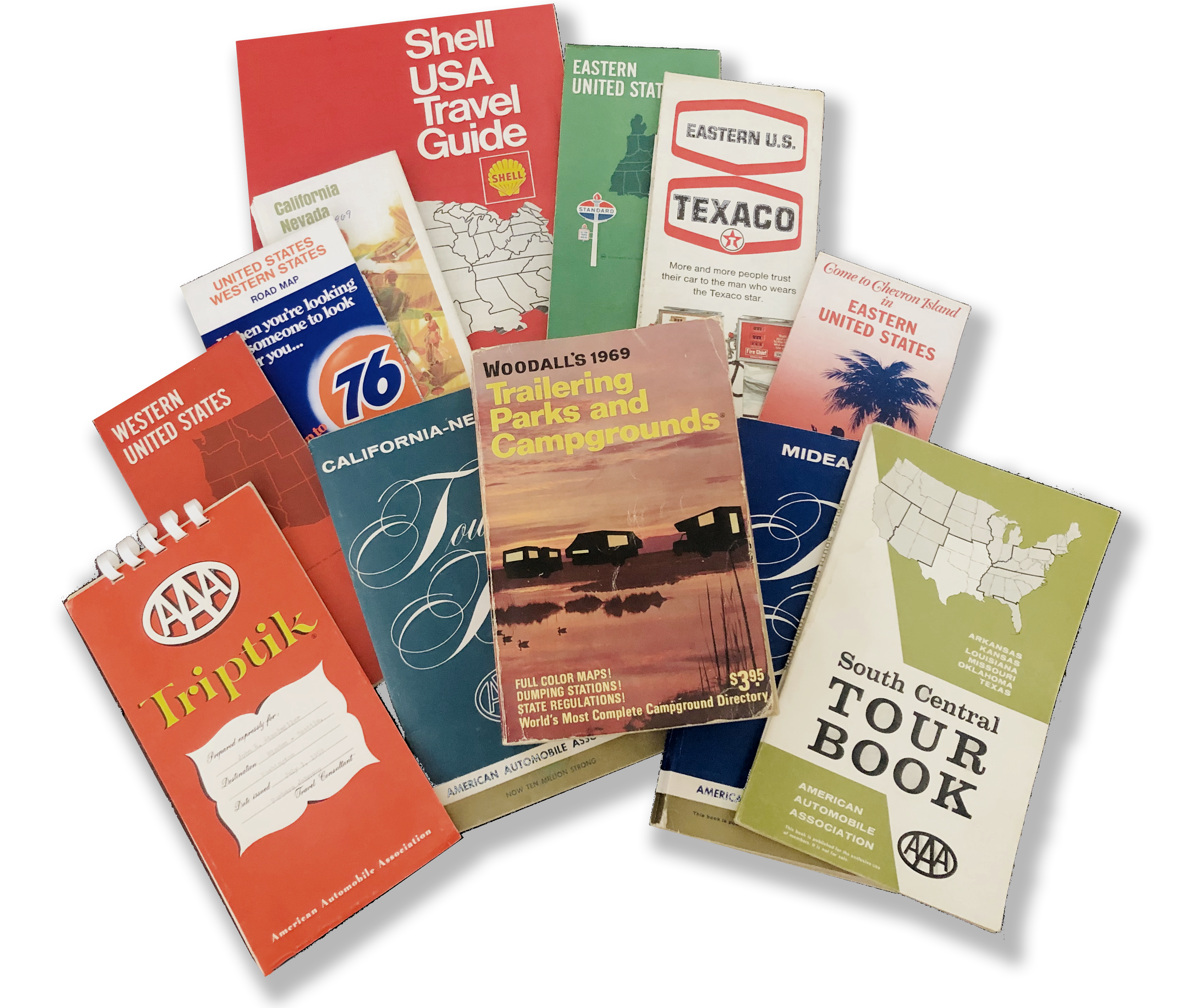
In preparing for this blog, I purchased a number of maps, atlases and guide books from 1969. It’s astounding to see what people are selling on Ebay. And it’s equally astounding what people are buying there. What a country!
Maps. (before apps, Google, GPS, etc)
Back then, every gas brand had its own maps for sale, usually limited to that state or region. Book stores might have a broader range of full US maps and atlases.
As I reviewed these maps, I found it interesting (and a little frustrating) that each brand of map was slightly different in scale and symbols. Assembling “one” map of the trip from this disparate collection yielded a few incongruities that I hope you’ll forgive. For instance, on July 21 we will cross from California into Oregon; the California map is a AAA brand, while the Oregon map is Standard Oil’s Western US map. Hoo boy, you can just imagine my conundrum!
Part of the library I amassed for this project. Even with these books and the vast internet, some locations and businesses are lost to the ages.
Guide Books
There were guidebooks too. AAA published regional guides that listed restaurants and lodging, town by town (but not on a map). These were often less than a smattering of what was actually available. And because it was heavily advertiser-supported, it seems suspect to me. Plus, the AAA guides didn’t cover campgrounds, so these books weren’t very helpful in this project. Btw, there were no apps like Yelp or Trip Advisor, as if I needed to remind you.
Triptiks!
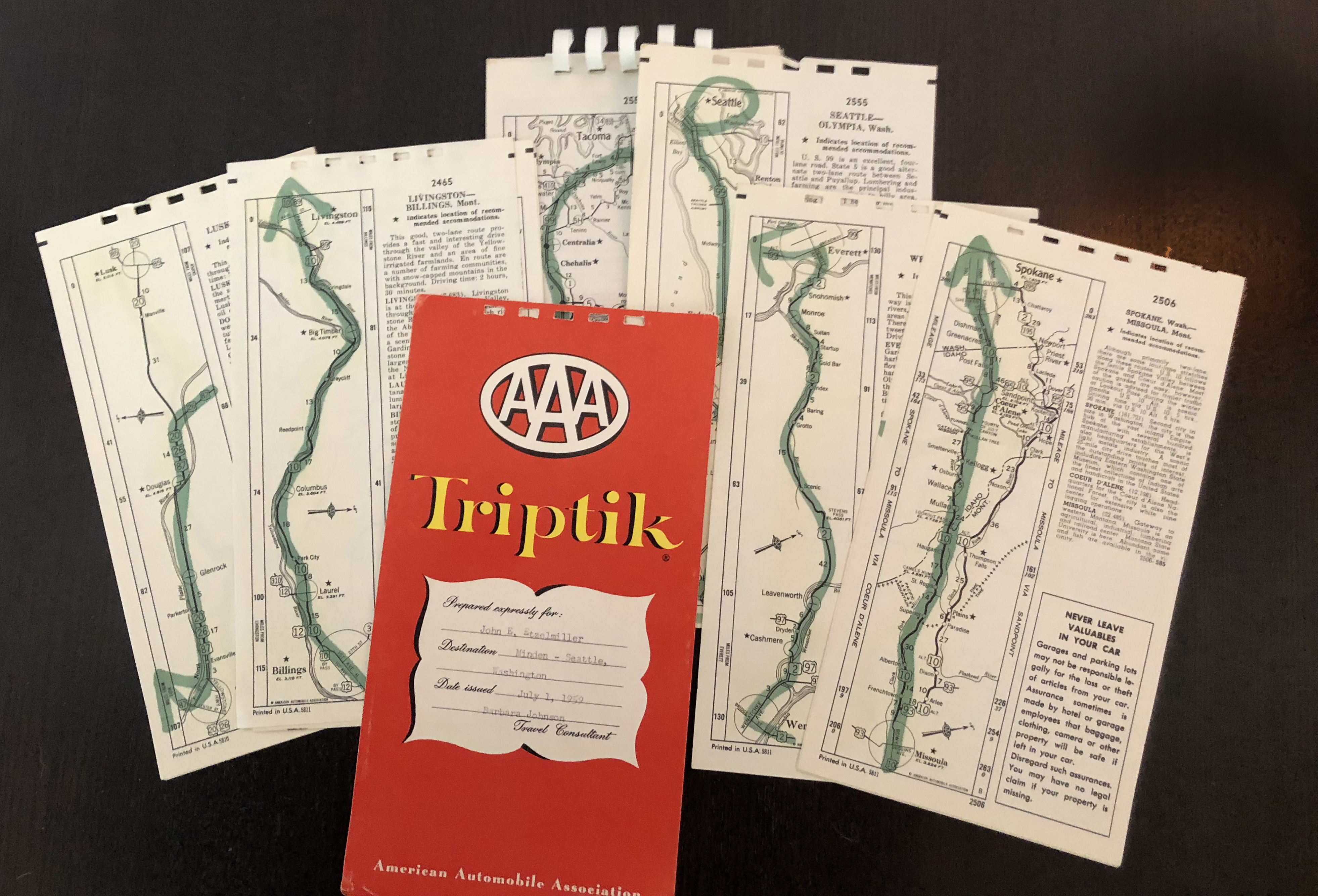
AAA also created Triptiks. These were customized, hand-marked and -assembled pamphlets of maps bound together in order of the trip. One page would get you from point A to B, the next from B to C, and so on. The pages had an odd configuration such that the route always went from top to bottom or vice versa, no matter the direction you were actually heading. Mom didn’t use a Triptik on this trip because I think she wanted to be open to diversions. She did call on them plenty of times for later trips.
Mom’s bible was Woodall’s 1969 Trailering Parks and Campgrounds ($7.95 on ebay, plus shipping). At over 1200 pages, this no-nonsense guide included seemingly every strip of land big enough for a tent to stake claim anywhere in the USA.
While Mom preferred the cheaper state parks for most nights, she would research a “deluxe” facility every third night, for comfort and hygiene.
To book these campgrounds, Maw would use pay phones along the way, a day or so in advance.
Believe it or not, that was an innovative approach back then — long distance calling! — if we are to believe this ad from Ma Bell in one of the guide books.
At least the lady is letting the man do the talking(!). Hello 1969.
“How to read a road map”
“It’s very simple.”
I could imagine seeing this headline on any print map in 2019. 50 years ago, though, such a skill would seem to me to be basic, like reading an analog clock or writing cursive or surviving gluten.
The Best Navigation Advice I Ever Received
“As long as you have a tongue in your head, you will never be lost.”
Marge Binder, throughout my childhood
I recall Mom adding adding something about a dime or a quarter in her advice — things required to make a phone call back in the day — but I’ll keep it pithy here.
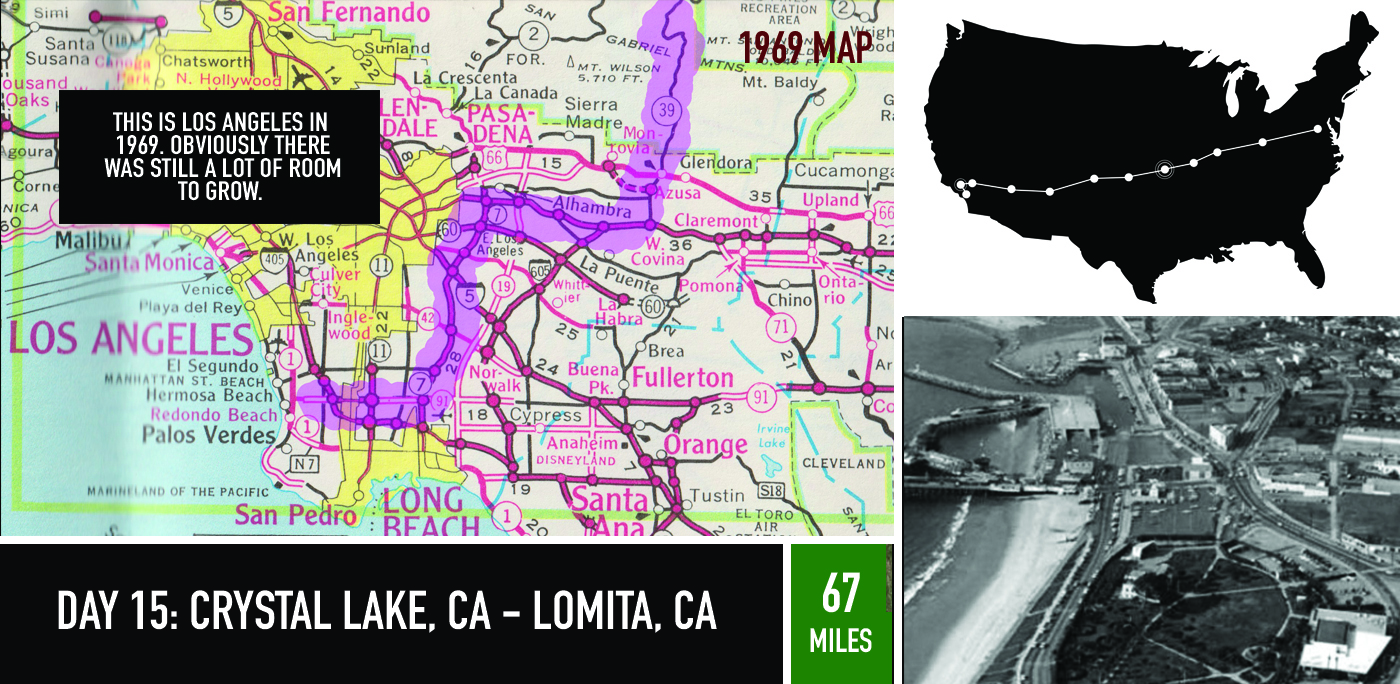
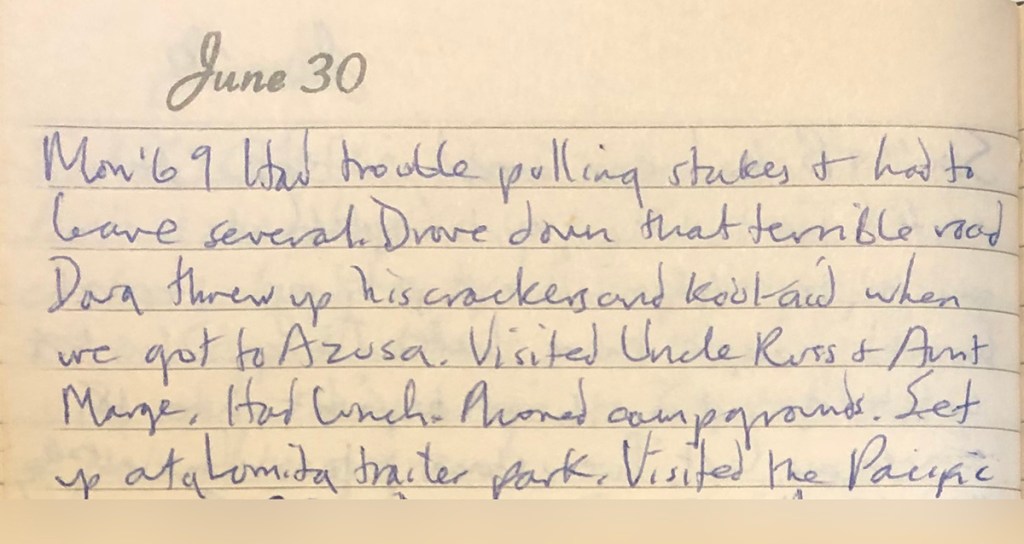
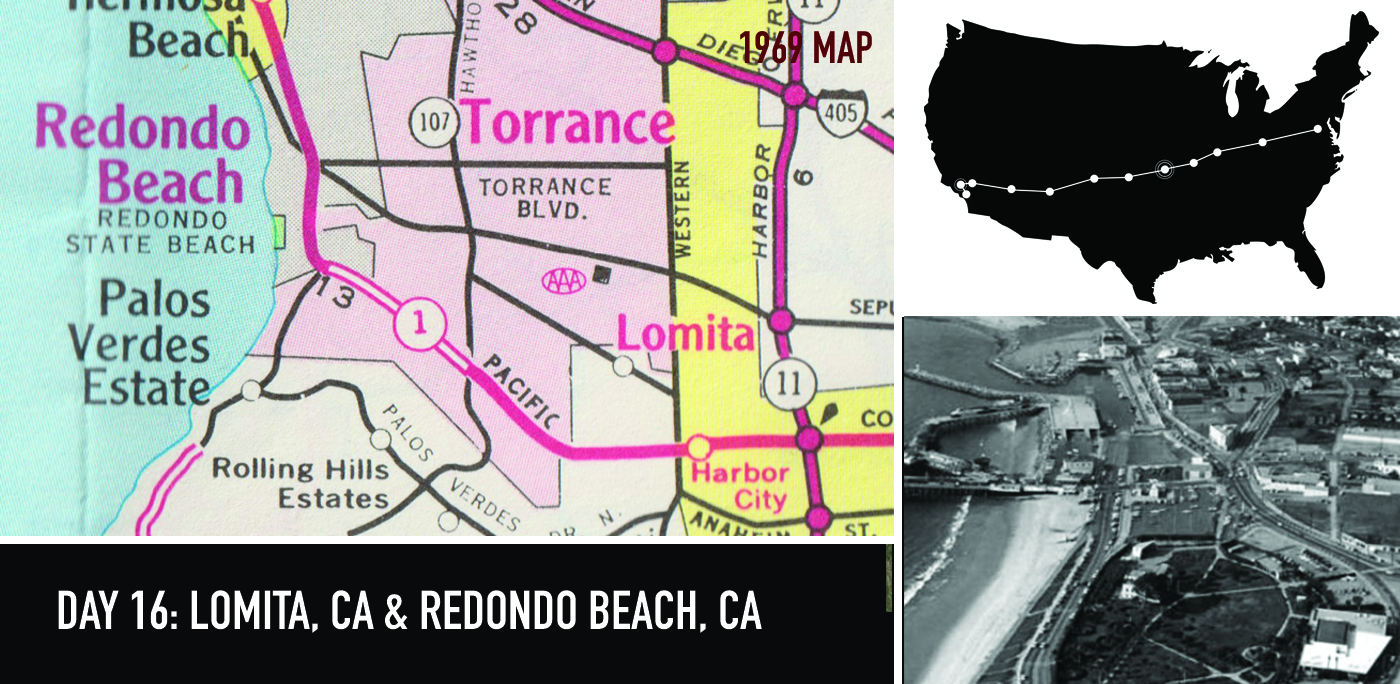
Had trouble pulling stakes & had to leave several. Drove down that terrible road. Doug threw up his crackers and kool-aid when we got to Azuza. Visited Uncle Russ & Aunt Marge. Had lunch. Phoned campgrounds. Set up at Lomita trailer park. Visited the Pacific.
That “terrible road.”
This is the road Mom references. Looking at it, I’m feeling the kool-aid and crackers gurgling up even now!
Seriously, what could go wrong when you load a four-year-old up with crackers and Kool-Aid, stuff him in the back seat and then traverse this serpentine nightmare?
As I recall (which might have been a dream), I erupted forth with a smooth pink sloosh into the front passenger seat, right down Tim’s back.
Ever since, Mom considered this episode a highlight and a low point of the trip and my childhood. To this day, Mom refers to this moment by its exact geography: “25 miles north of Azusa.”
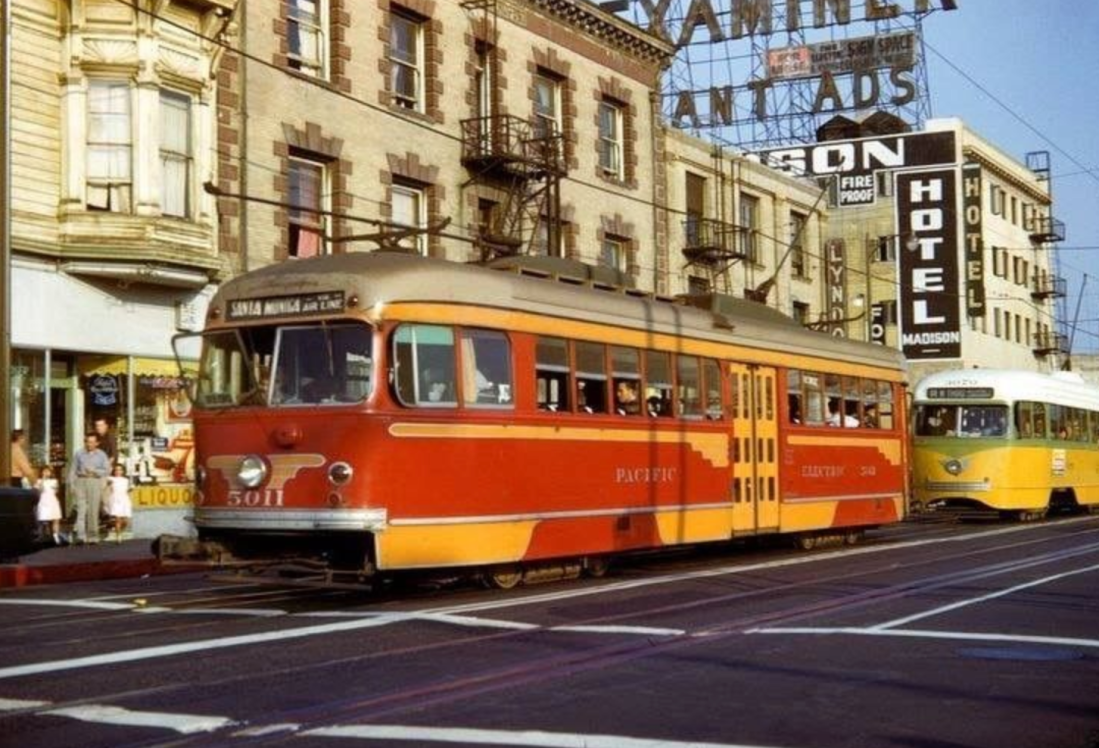
This is probably from the 1930s, which was just before Mom moved to SoCal with Gran and Uncle Harold, They lived there for only two years, but it made an impact. Photo shared from here.
Mom moved with Gran and Uncle Harold to Los Angeles in the early 1940s, soon after my grandfather’s very untimely passing. She was about 12. All my life, she’s shared her fascination with southern California, recounting tales of the trolleys and buses that ferried her all over. There were still plenty of orange groves and a feeble infrastructure back then, but it sounded pretty glamorous to me! She recently mentioned her discovery and love of artichokes; something else she missed when they all returned to artichoke-deprived Michigan after two years.
Mom and I visited again in 1980 (a whole other story, including bunking at Howard’s Weekly Apartments on the way-sketchy Hollywood Boulevard, a day of Family Feud and an evening with Lynda Carter and Tom Jones!).
It was always my destiny to live here. Accomplished, if only for a half dozen years.
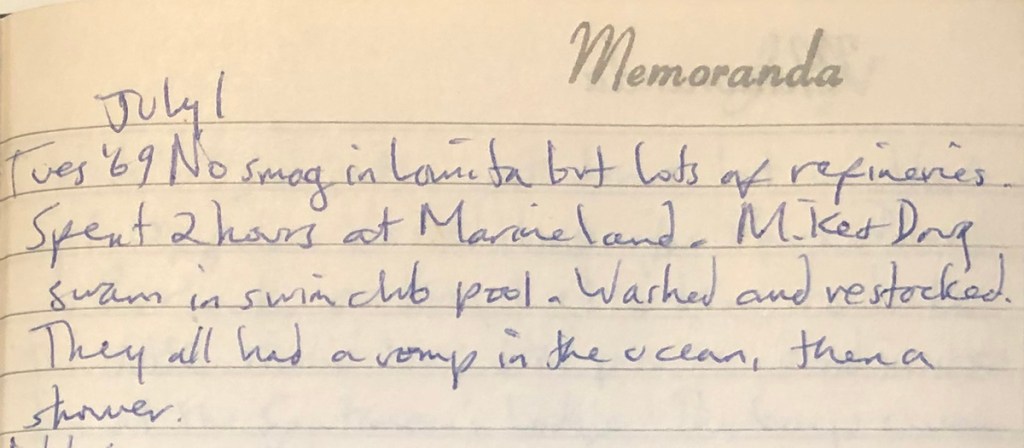
No smog in Lomita but lots of refineries. Spent 2 hours at Marineland. Mike & Doug swam in swim club pool. Washed and restocked. They all had a romp in the ocean, then a shower.
Marge Binder, July 1, 1969
Lomita
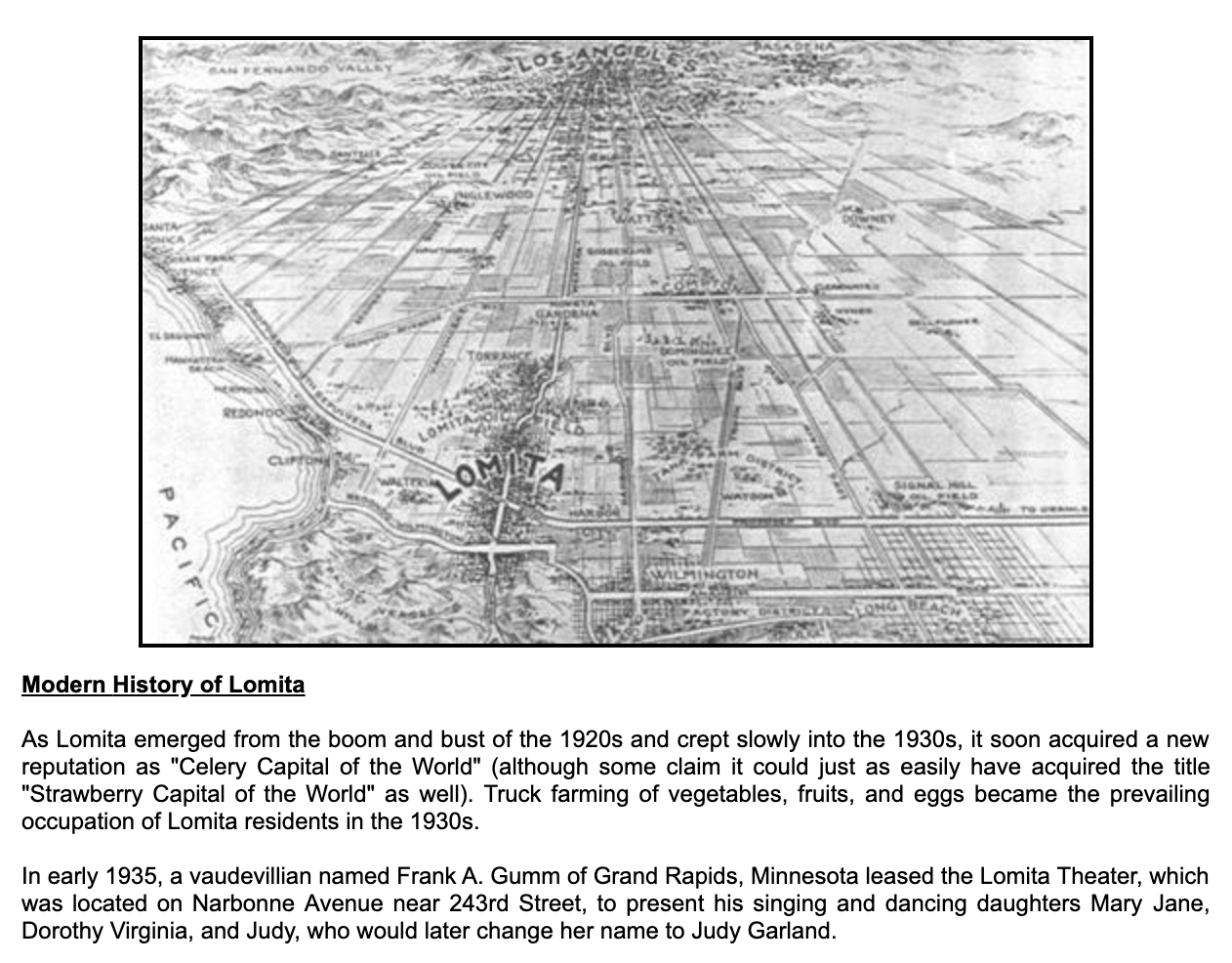
Here’s a screen grab from the Lomita website. I love the illustration of a proud and bustling Lomita surrounded by the fields that would soon rise high and shut out the bright lights of mighty Los Angeles.
The Tick Tock
While this location doesn’t appear to be ideal, Mom says it was convenient to everything, especially the beach. One of the highlights I remember is a place called the Tick Tock (or TikTok) that neighbored the campground. Most mornings, Mom and Dad would entrust Mike and me with several dollars to retrieve coffee, donuts and whatever else caught our fancy.
Like so many monuments of our 1969 trek, the little market is gone and forgotten, at least by the internet and chamber of commerce.
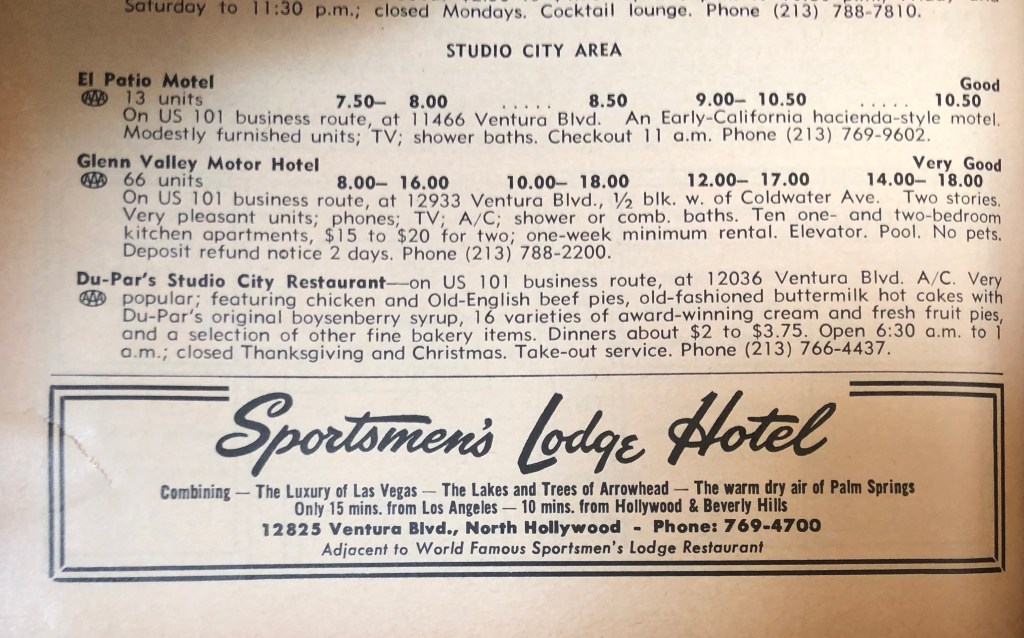
Did battle with Sears but still couldn’t get top poles. Visited Huntington Park. Drove to Burbank, getting lost often, to take the NBC studio tour. Had pizza and visited Jim at the Sportsman’s Lodge. The boys swam and we all had ice cream. He stayed. We came back.
Marge Binder, July 2, 1969
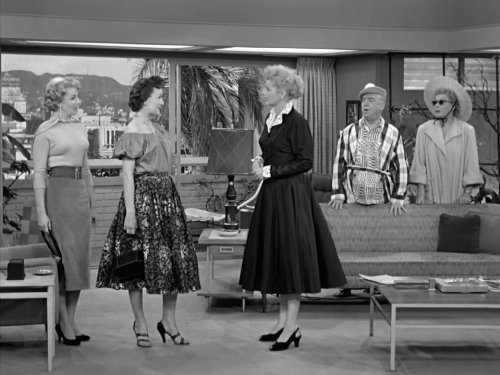
My memory of seeing Dad at the Sportsmen’s Lodge is mesh-melded with the episode of “I Love Lucy” when they road trip to California and get put up in a swank Hollywood hotel (perhaps marking the first-ever shark-jumping moment in television).
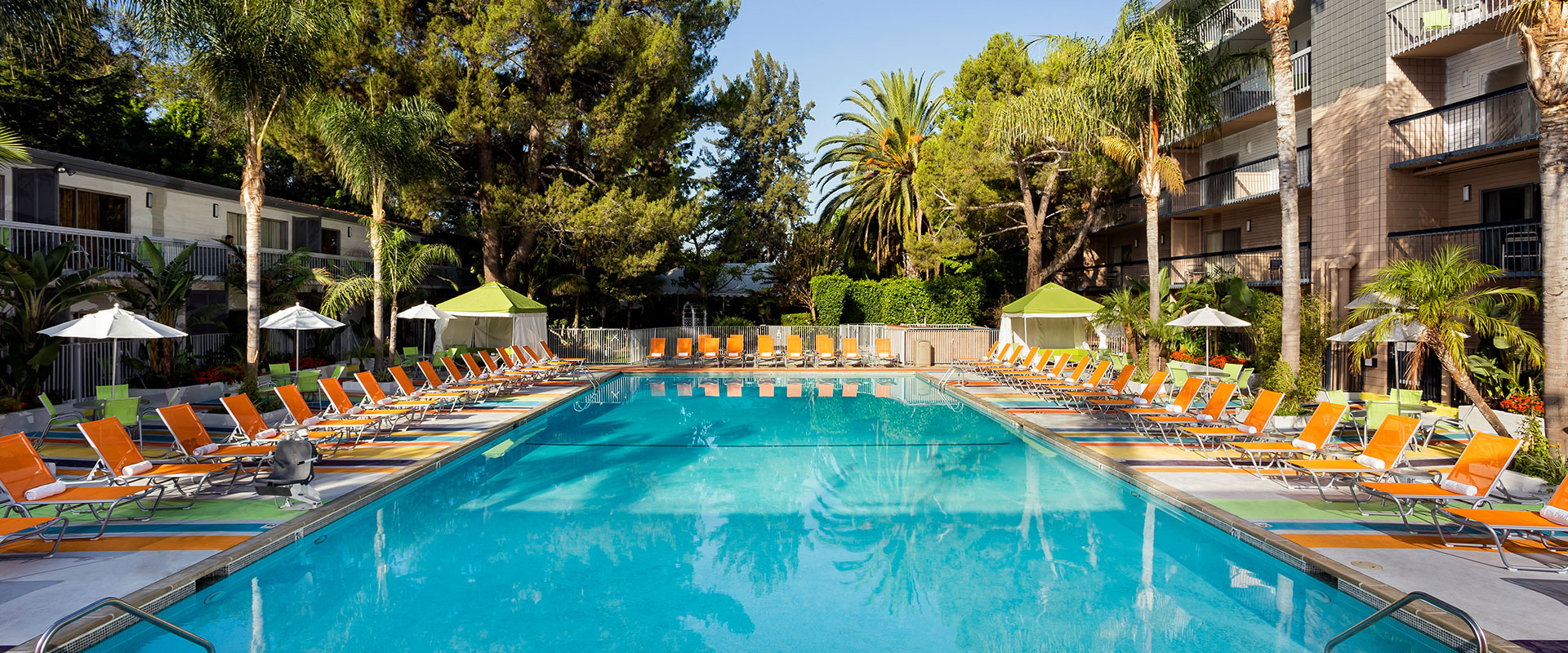
In my mind’s eye, the furnishings and view from the Ricardos’ room is the same as Dad’s, but Dad’s place is in color. He resided there a few more days, while Mom and the rest of us slunk back to the tent in Lomita. As Mom put it: “He stayed. We came back.”
I think that’s when I started appreciating the five-star hotel lifestyle over other modes of lodging.
The Sportsmen’s Lodge is still there. According to its website, it is “The Soul of Iconic Hollywood.”
I’ll admit it: I have no recollection of this day. Chances are I was still fretting over the sad fate of Mr. Lincoln. Or perhaps the Disneyland fireworks were still popping inside my brain.
Actually, I don’t remember most of this trip. So when I started tinkering with the idea of recounting it, I knew I needed some meat. What a revelation to find Mom’s diary (thank you, Helen Binder!) and to get her permission to use it. The surviving photos offered some assistance as well (Thanks Miko!). But the actual memories are few and far between; I’ve conveyed them in here when applicable.
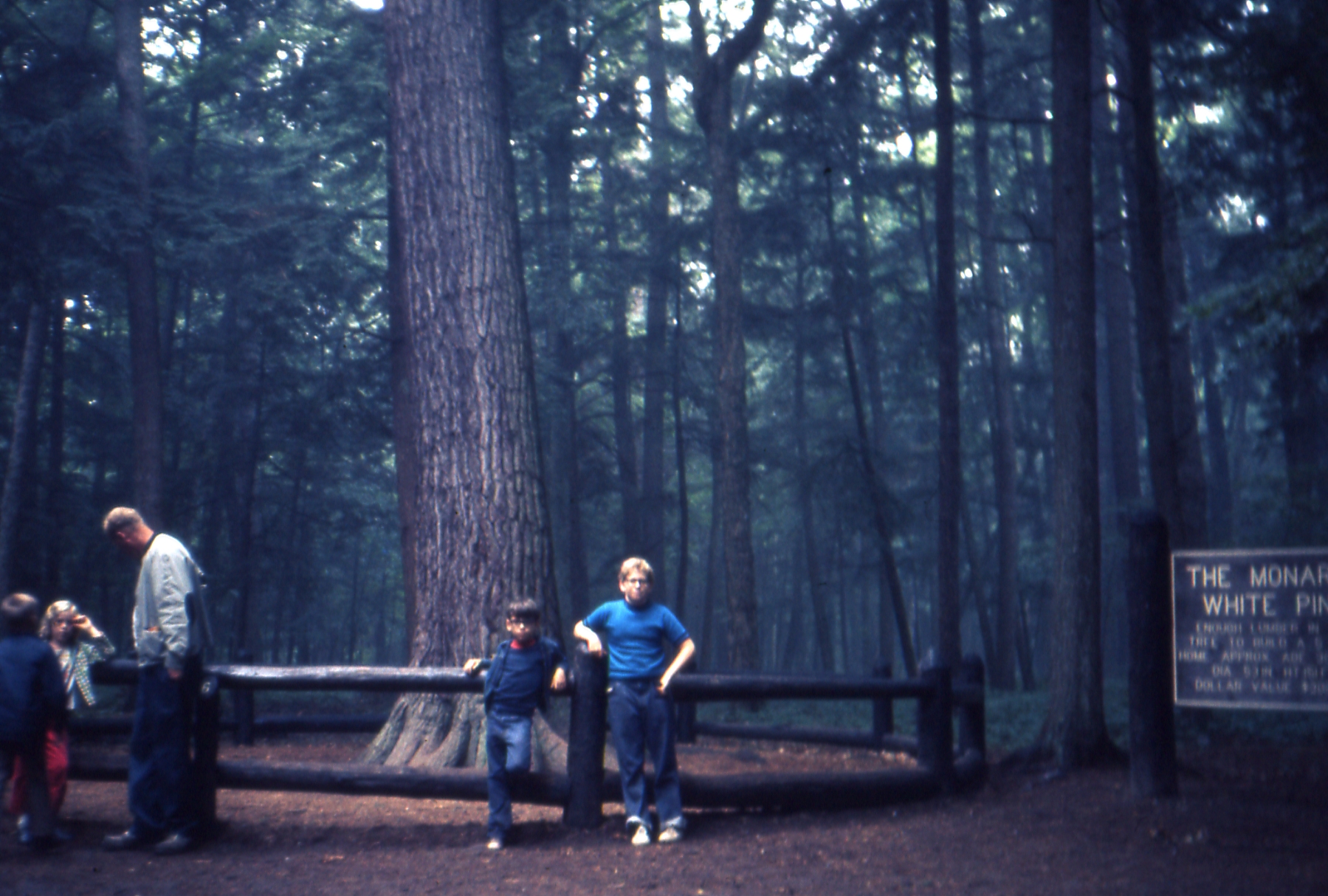
I’ve also attempted not to co-mingle memories from other trips and similar experiences. So I didn’t include a picture of Mike and me in the Redwoods in 1969 because — as I discovered a few weeks ago — it wasn’t taken in the Redwoods in 1969. It was, in fact, taken in the early 70s in front of very Redwood-looking trees towering over north-central Michigan.
One of my other distinct memories I had attributed to this trip was at Pismo Beach, where Mike and I stormed the surf, throwing rocks and yelling “Bomb Cambodia!” (We Binders were a hawkish bunch back then.) Mom recently set me straight: Bomb Cambodia happened somewhere in Ohio a few years later. Figures. Mom remembers best.
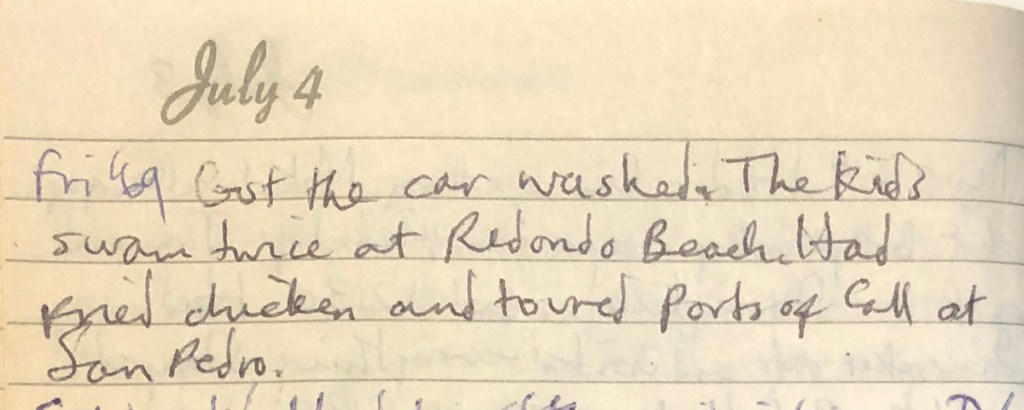
Got the car washed. The kids swam twice at Redondo Beach. Had fried chicken and toured Ports of Call at San Pedro.
Marge Binder, July 4, 1969
I almost forgot! Here’s an interesting article about “childhood amnesia.”













 Marge Binder's Epic Adventure